
Breast Revision Surgery in Korea: Planning the Second Operation with Care
When the result of a first surgery has not satisfied you, or when time has brought a problem such as capsular contracture or a ruptured implant. Revision calls for finer judgement than a first operation. U&U Plastic Surgery in Gangnam, Seoul treats only the breast, and breast revision in Korea after surgery at another clinic, including implant replacement and capsule work, is one of our main fields.
Medically reviewed byKikap Kim · Chief Director, Plastic Surgery
Breast Revision in Korea
- Who it is for
- Capsular contracture, ruptured or ageing implants, bottoming out or displacement, dissatisfaction with shape or size, asymmetry or a one-sided problem, or a wish to have implants removed, after surgery at another clinic, including one in another country.
- Diagnosis
- On the day of your visit, breast ultrasound checks the implant, the capsule and the surrounding tissue. Capsular contracture is graded from 1 to 4 by firmness, visible distortion and pain.
- Capsule handling
- The condition sets the scope: leave the capsule in place, partial capsulectomy, or total capsulectomy. Where the tissue is thin, acellular dermal matrix is considered.
- Incision and implant
- Reusing your previous incision so that no new scar is added is considered first, and the type and size of the new implant are chosen together with the state of your capsule.
- Medical team
- Dr. Kikap Kim, Chief Director (plastic surgery; appointed Key Opinion Master by Motiva Korea), plastic surgeons Dr. Jeonghwa Seo and Dr. Yunggi Lee, and Dr. Beomsik Bang, On-Site Director of Breast Surgery.
- Timing
- Suspected infection, a confirmed rupture or a growing haematoma call for a quick decision. If the reason is shape or size, the rule is to wait until the tissue has settled.
- Length of stay
- Revision often needs closer progress checks than a first surgery, so we ask first how long you can stay and judge whether the work can be completed safely within that time.
- Preparing and contact
- Tell us as much as you know: when, in which country and at which clinic you had surgery, the implant maker and size, and any recent ultrasound results. Phone +82-2-544-6996, online consultation, WhatsApp, LINE or WeChat depending on your region, and KakaoTalk. Weekdays 10:00 to 19:00, Fridays until 21:00, Saturdays 10:00 to 16:00.
Why Revision Is Harder Than the First Surgery
Revision works on tissue that has already been operated on once. The state of the existing implant and capsule, how much soft tissue is left, where the previous incision sits, all of that has to be read. There are far more variables than in a first operation. So revision is not putting something back in. It is finding the cause of the problem and designing again.
U&U Plastic Surgery is a clinic devoted exclusively to the breast, and revision is one of our main fields. Capsule management including total removal where needed, use of acellular dermal matrix, revision at larger volumes (D cup and above), revision on one side only: we consult on each of these exactly within the scope published on our medical team page. We also take consultations for complications after surgery at other clinics.
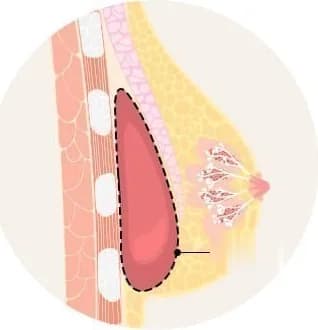
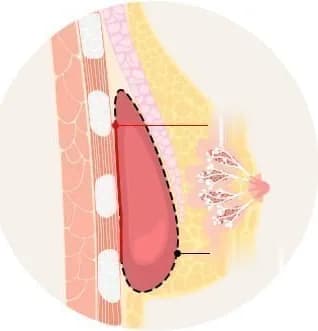
Situations That Call for a Revision Consultation
Before you decide on revision, the first thing is knowing which of these your current condition falls under.
Capsular Contracture
The breast has become firm and the shape distorted by capsular contracture. This calls for a redesign that includes how far the capsule is treated.
Implant Rupture or Aging
A rupture has been confirmed, or an older implant has reached the point of exchange. We confirm the state with ultrasound first.
Bottoming Out or Displacement
The implant has dropped low (bottoming out) or slid sideways. Rebuilding the pocket is the heart of it.
Unhappy with Shape or Size
The result differs from what you expected, or you want to change the size. We put the look you want and the state of your tissue side by side and tell you honestly what is achievable.
Asymmetry or a Problem on One Side
A problem on one side does not mean both sides have to be redone. Single-side revision is something we consult on too.
When You Want Your Implants Removed
Some people want the implant taken out and to leave it there. We consult on that too, including how the shape will look after removal.
How Revision Works for International Patients
In revision, information about your previous surgery matters. If you can give us what you know at the online consultation stage (implant type, when it was done, current symptoms), we can guide you far more precisely.
- 01
Online consultation: confirming your previous surgery
Send photos along with what you know of your previous surgery and what is troubling you now, and we will go through the direction and the schedule.
- 02
In-person examination: diagnosing the state
We check the implant, the capsule and the tissue with breast ultrasound and other examinations, and diagnose the cause of the problem.
- 03
Revision Planning & Surgery
We decide how far the capsule will be treated, the type and size of implant, and the incision site (reusing the existing incision where possible), then operate.
- 04
Recovery & Follow-Up After You Return Home
We check your progress while you are here. Once you fly home, we carry on following the recovery online.
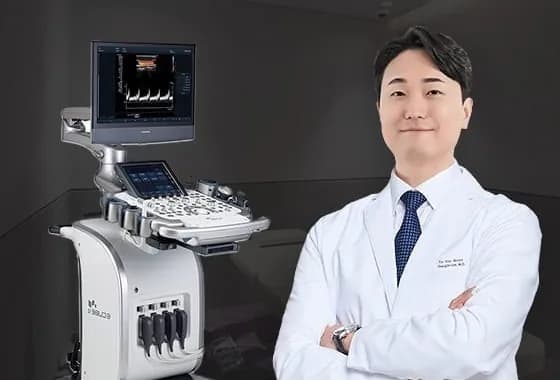
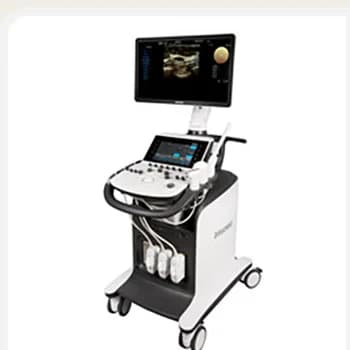
The Basis of Revision: We Confirm by Examination Before We Start
Revision cannot start from guesswork. U&U confirms the state of the implant and capsule with breast ultrasound before surgery. Afterwards we keep watching your breast health with regular check-ups, breast ultrasound and a mammotome examination where needed. If your condition is not suited to surgery, we do not recommend it. That is a principle we hold to.
See Our Post-Surgery Breast Screening GuideCapsular contracture is judged in grades
We do not decide on revision from a feeling of firmness alone. We separate out the firmness on touch, the visible distortion of the shape, and whether there is pain. The treatment changes with the grade.
| Grade | Condition | Usual judgement |
|---|---|---|
| Grade 1 | Soft, with a natural shape | Observation |
| Grade 2 | Slightly firm, but the shape looks normal | Observation and management |
| Grade 3 | Firm, with visible distortion of the shape | Revision is considered |
| Grade 4 | Firm and distorted, accompanied by pain | Revision is indicated |
The starting point of contracture that many people miss
Infection, haematoma and tissue injury during surgery are usually named first as causes of capsular contracture. But there are cases those alone do not explain. There is a phenomenon called gel bleeding, in which silicone seeps out in very small amounts through microscopic gaps in the implant shell. It can happen without any rupture, and when it does happen it does not necessarily lead to contracture.
What it does do is this: when the escaped particles meet the surrounding tissue, a foreign-body reaction and inflammation follow, and the character and thickness of the capsule around the implant change. There is a path from that change to a change in feel, and on to contracture. A study published in an American plastic surgery journal in 2023 compared capsules from the mildest and the most severe grades of contracture and reported far more silicone particles on the severe side. The problem is that early on, none of this shows from the outside. Which is why we say to have this done somewhere that will keep looking at your breast after the surgery too.
How much of the capsule to remove
This is the choice that most decides the difficulty, the cost and the recovery time of a revision. Taking it all out is not automatically right, and leaving it alone is not automatically right either.
Leaving it in place
The capsule is thin and soft and the cause of the problem lies elsewhere. Removing it when there is no need only adds tissue injury and bleeding.
Partial removal
Only part of it has thickened, or the capsule has to be opened on one side to correct the position. This is used often in correcting bottoming out.
Complete removal
The capsule has hardened thickly or has calcified, contracture has recurred, or a rupture has left contents inside the capsule. This is the most demanding of the options.
Using acellular dermal matrix
Considered when the soft tissue is thin enough that the implant shows or can be felt, or when a supporting structure is needed to reduce recurrence.
When you do it changes the outcome
The timing of a revision splits in opposite directions depending on the condition. Where infection is suspected, a rupture is confirmed, or a haematoma is growing, waiting only increases tissue damage. That needs a fast decision. Conversely, if you want it redone because you dislike the shape or size, not rushing is better. The shape right after surgery is not the final shape. Swelling has to settle and the tissue has to find its place, and that takes time.
For patients coming from abroad there is one more thing on top. Revision often needs the progress checks spaced more closely than a first operation. So at the consultation stage we ask first how long you can stay, and judge from there whether the work can be finished safely inside that window. Sometimes splitting it across a second visit is better than forcing it into one schedule. When that is the case, we say so.
Information needed for a revision consultation
The more of the previous surgery is on record, the more accurate the judgement. You do not need all of it. Whatever you know is enough to start from.
- When the surgery was done, and the country and clinic where you had it
- The manufacturer, line and size of the implant used. A warranty document or card is the most accurate of all
- The incision site and the layer the implant sits in. If you do not know, we estimate from photos
- What is troubling you now and when it started. Whether it came on gradually or suddenly matters
- If you have had a recent ultrasound or mammogram, the images or the report
- If you have had a revision before, how many times and why
What your first surgery left behind in revision risk
In a revision consultation we do not only look at your condition now. The choices made in the first surgery explain a good part of that condition. Below are tendencies observed repeatedly in international research. None of these choices is a mistake. The point is that you should know where the risk concentrates before making the next choice.
| Choice in the first surgery | Observed tendency | What we re examine in revision |
|---|---|---|
| Incision site | Capsular contracture is reported more often where the incision went through the areola. The areola carries many sweat and oil glands, so bacteria linger there more easily and the risk of contamination during surgery rises accordingly | We decide together, alongside your tissue condition, whether to re enter through the same site or approach from elsewhere |
| Implant surface | Surfaces with a fine texture tend to be reported with less capsular contracture than completely smooth ones | We choose the surface of the replacement implant together with the state of your capsule |
| Layer the implant sits in | Where soft tissue is thin and the implant sits in a shallow layer, palpability, visible edges and later distortion appear more readily | We consider changing the layer, or adding support with acellular dermal matrix |
A rupture without symptoms still calls for surgery
Sometimes a check up finds a rupture while there is no pain and the shape is unchanged. People then ask whether they must have surgery right away. Studies that followed asymptomatic ruptures over several years found that in a large share of cases the imaging did not deteriorate markedly during that time. So in many cases you are not in a situation that requires the operating table today.
But that is a question of when, not whether. Rupture divides broadly into two kinds: the leaked silicone stays inside the capsule, or it escapes beyond it. Fortunately most cases are the former. Left that way for a long time, the environment inside the capsule changes and it can lead to pain or to capsular contracture. Once it passes outside the capsule, the extent of removal widens and the surgery becomes harder.
So what we tell you is neither to rush nor to postpone. We confirm on imaging which type you have now, and set out together how much time that type allows. And since replacement is in practice removal and reinsertion in one operation, you need a plan for the reinsertion as well before a date can be set.
Do you have to go back to the clinic that operated first
You do not. Removal and revision are possible at any clinic that performs breast surgery. But the difficulty varies greatly with the method, so wherever you go, it is better to confirm the following before you decide.
Can they image the breast
Ultrasound is needed for almost every revision decision. Rupture type, capsule thickness and whether fluid has collected cannot be settled by inference alone without imaging.
Is breast care available alongside
Implant problems and problems of the breast itself sometimes overlap. Being able to look at both in one place makes the assessment faster.
Do they predict the change after removal
Removal happens months or years after the first surgery. Because of tissue change over that period, the nipple position and the inframammary fold do not return exactly as they were. See whether they tell you in advance how it will differ.
Do they explain how much capsule they will remove
The extent of capsule removal changes difficulty, recovery time and cost alike. If a price is quoted without explaining the extent and the reason for it, you are entitled to ask again.
How far does the breast return once the implant is out
This is the concern we hear most from people having removal only. Honestly, it does not return exactly to how it was before the first surgery. The years the implant was in place, weight change over that time, pregnancy and breastfeeding, and changes to skin and breast tissue with age all overlap. Those factors decide where the nipple and the inframammary fold will settle.
So in consultation we do not answer yes or no on whether it returns. We tell you how much can be expected under your present conditions. Where considerable sagging is expected, we put removal combined with a lift on the table alongside. Conversely, where enough tissue remains, removal alone gives a satisfying result in some cases. This assessment needs photographs, examination by hand and ultrasound together.
For those travelling from abroad there is scheduling on top of this. Removal alone and removal with a lift require different lengths of stay and different numbers of follow up checks. So we ask at consultation how long you can stay and set the possible scope from there.
How we judge recovery after removal or revision
Whether healing is going well is not judged by appearance alone. Most of the items below are confirmed by ultrasound. When you have a check done locally after returning home, the same items apply.
- Whether fluid has collected in the space the implant occupied, and whether that volume is decreasing
- Whether bleeding remains. Retained blood can lead to inflammation
- Whether the tissue that surrounded the implant is thickening abnormally
- How much swelling remains and at what rate it is subsiding
- Whether the character of the pain has changed. Pain that was easing and then increases needs checking
- Whether the difference between the two sides is widening during recovery
Why the second operation takes longer than the first
People are often surprised when we give the timings for a revision, because it is longer than for a first operation. The reason is plain. The first time starts in tissue nobody has touched. A revision starts in tissue that has already been operated on once. That difference shows up in both operating time and recovery.
Three things get added specifically. Deciding how to handle the capsule around the implant and then actually dealing with it. Re-establishing the boundaries of the original pocket when it no longer fits the body it is in. And producing a result on top of remaining tissue that has thinned. None of the three exist in a first operation.
So we tell patients travelling in not to plan a revision on the same timeline as a first surgery. You need to allow more days in the country, and the number of follow-up visits goes up. That is why we check your current state at the consultation and give you the schedule it actually requires before anything else.
The Questions We Hear Most About Revision
- Can you revise surgery done at another clinic, or in another country?
- Yes. Revision after surgery at another clinic is one of our main fields. Tell us what you know of the previous surgery (implant type, when it was done), however much or little that is, and we can guide you far more precisely.
- How long after the first surgery can I have a revision?
- It depends on the condition. As a rule we wait until the tissue has settled. But problems such as rupture or infection can need a faster decision. We look at your condition in consultation and set the timing together.
- Will revision surgery add more scars?
- Wherever possible we start from reusing the previous incision so no new scar is made. It can change depending on how far the capsule has to be treated, so we will tell you precisely at your consultation.
- Can I just have my implants removed?
- Yes, that is possible. We consult on how the shape will change after removal, and if you want, we will also go through what can be done at the same time to compensate.
- How much does revision surgery cost?
- It changes with how far the capsule is treated, the type of implant and the difficulty of the surgery, so a single figure would be misleading. Look at the structure in our cost guide first, then get a personal estimate through a consultation.
Start by Finding Out Exactly Where You Stand
Information about your previous surgery and a few photos are enough to start an online consultation. Whether your condition needs revision, and what methods are open to you, we will tell you honestly and without pushing.