
Korean Breast Augmentation, From Start to Finish
Why do so many people choose breast augmentation in Korea and fly all the way to Gangnam in Seoul for it? And once you get here, what actually happens? U&U Plastic Surgery has done nothing but breasts for twenty years. Here is the whole path, from your first consultation to the follow-up after you fly home.
Breast Augmentation at U&U Plastic Surgery
- Scope
- A plastic surgery clinic on Nonhyeon-ro in Gangnam, Seoul, that treats breasts only.
- Medical team
- Dr. Kikap Kim, Chief Director (plastic surgery; appointed Key Opinion Master by Motiva Korea), plastic surgeons Dr. Jeonghwa Seo and Dr. Yunggi Lee, and Dr. Beomsik Bang, On-Site Director of Breast Surgery.
- Your surgeon
- One attending surgeon looks after you 1:1, from consultation through surgery and aftercare.
- Surgeries per day
- At most three a day, at 10:00, 13:00 and 16:00.
- Implants
- Genuine Motiva, Mentor and BOUNS implants, used with the genuine-product warranty.
- Schedule
- If the timing works, surgery can take place on the day of your consultation. The length of your stay is set in consultation, based on how many progress checks you need before flying home.
- Consultation
- Phone +82-2-544-6996, online consultation, WhatsApp, LINE or WeChat depending on your region, and KakaoTalk. Weekdays 10:00 to 19:00, Fridays until 21:00, Saturdays 10:00 to 16:00.
Why Korea, and Why Gangnam
Gangnam is one of the densest places anywhere for breast surgery. When that much surgery happens in one district, technique, implant choice and recovery care get refined quickly. The experience a surgical team builds up is denser too.
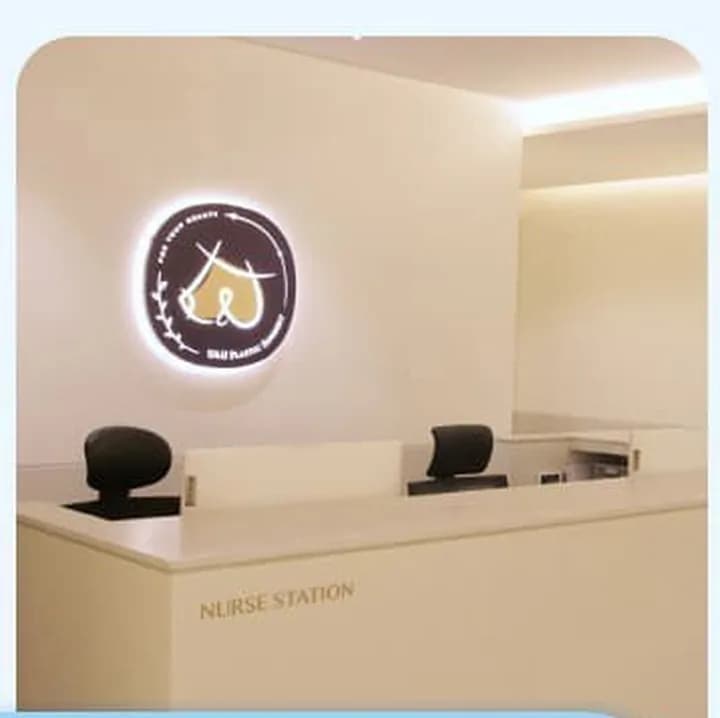
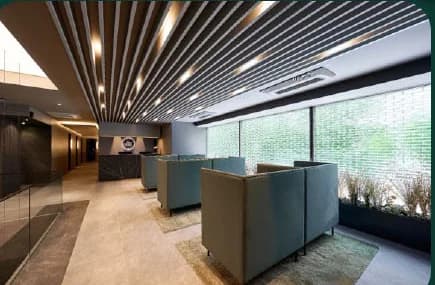
U&U Plastic Surgery is a breast-only clinic on Nonhyeon-ro in Gangnam. We are not a general practice doing eyes and noses alongside. We do breasts, and nothing else. We also do not stop at the operation. Screening beforehand and recovery care afterwards are tied into one process. We call it 'Breast Surgery 1.0', and it means we stay on the essentials.
How the Process Works for International Patients
For those of you flying in, time is money. So we have kept the process as short and as predictable as we can.
- 01
Online Consultation
Send us photos and tell us what you are hoping for. We consult with you online first. You will hear which directions are open to you given your build and your breast condition, and roughly how many days to set aside.
- 02
In-Clinic Consultation & Examination
On the day you come in, a specialist sees you in person and runs the tests you need, ultrasound among them. Implant type, size and incision site are decided with you right there.
- 03
Surgery
If the schedule allows, surgery can be done on the same day as your consultation. It is carried out under anaesthetic management. Once you have recovered for the day, you move to your accommodation as directed.
- 04
Recovery & Progress Checks
While you are here we check your progress and look after your early recovery. Before you fly home we go over your condition once more and show you what you can do on your own.
- 05
Follow-Up After You Return Home
After you get home we keep following your progress online. If anything comes up, just ask through the online consultation.
Choosing an Implant — Authentic, and Right for Your Body
U&U uses genuine implants from three manufacturers: Motiva, Mentor and BOUNS. What decides the type and the size is not the current trend. It is your build, the state of your soft tissue, and the look you want. For the surgery itself we lean towards approaches that keep tissue trauma to a minimum, Preservé among them.
Motiva
A premium implant. It feels soft, and the shape follows your movement naturally.
Mentor
A US FDA-approved implant with a long track record of use around the world.
BOUNS
A Korean-made implant with finely graded width, height and volume options, approved by Korea's MFDS (product approval No. 15-1620).
Safety — Screening, Anesthesia, and Honest Judgment
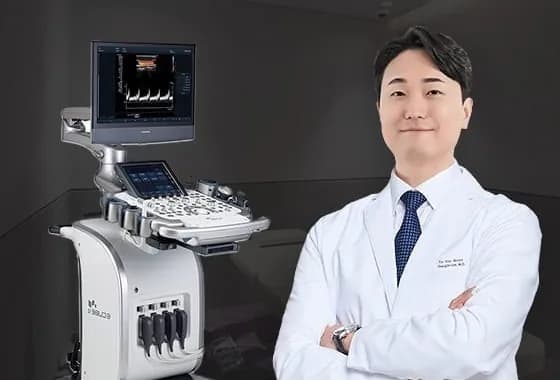
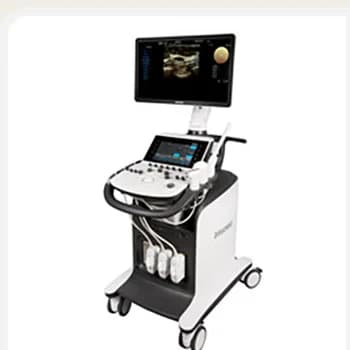
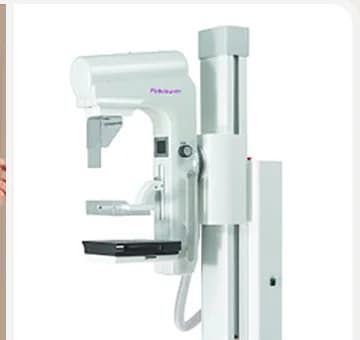
Before surgery we check where you stand with blood tests, breast ultrasound and other examinations. During surgery your anaesthetic state is monitored continuously. And if your condition is not suited to surgery, we will not recommend it. That is a principle we hold to. The possibility of complications such as bleeding, infection and capsular contracture, and how each is managed, is something we go through with you rather than gloss over.
After Surgery Is the Real Beginning: Our Care Program
Recovery after surgery is run as its own care program at U&U. Scar and swelling care, bra fitting guidance, and physical therapy that helps recovery all sit inside it. Even after surgery we keep doing regular breast ultrasound, so the implant and your breast health are watched together. We see breast surgery not as one operation but as care you live with for a long time.
Which plane the implant goes into is the first fork in the road
The same implant behaves differently depending on the plane it sits in. Feel, shape and how fast you recover all shift. It is decided at the consultation, after we have actually measured how thick your soft tissue is.
| Plane | Position | Suited to | What to weigh |
|---|---|---|---|
| Subglandular | Directly beneath the breast tissue | Soft tissue that is thick enough | If the tissue is thin, the edge of the implant can show |
| Subfascial | Under the fascia covering the pectoralis major | When one more layer of cover is wanted over thin tissue | Handling the fascia raises the technical demand |
| Submuscular | Beneath the pectoralis major | When thin tissue leaves the upper contour visible | The shape can shift with muscle movement |
| Dual plane | Under the muscle above, under the gland below | Mild sagging where lower volume is needed | Wider dissection can mean more discomfort early on |
Where to put the incision
Move the incision and you move where the scar sits, along with the view and the access during surgery. None of them is simply better than the others. We choose by your build, the implant type, and whether this is a revision.
Armpit
The big advantage is that no scar is left on the breast itself. We dissect under endoscopic view, and the scar settles along a natural crease in the armpit.
Inframammary fold
You can see the pocket directly while it is being made, which makes the position easier to set precisely. The scar hides in the fold under the breast. It is often the choice for revisions too.
Areola
The incision follows the colour border of the areola, so the scar is harder to spot. Your areola has to be wide enough, though, and the route passes through the ducts, so it depends on the situation.
What divides implants by surface and by shape
Most people start from the brand when they think about implants. The difference your body actually feels comes from the surface and the shape. Surfaces divide into smooth types and textured types with a fine relief. That property changes how the implant meets your tissue, and how much it moves once it has settled.
Shapes divide into round and teardrop, the latter carrying its volume lower. A round implant gives you fullness up top and barely changes if it rotates. A teardrop gives a more natural slope, but where it settles matters more. Which one suits you is judged after measuring your chest width, your lower breast length and your skin elasticity. How the size is chosen is set out in more detail in the size guide.
Operating time, anaesthesia, and recovery on the day
The augmentation itself does not take long. Add the preparation, the induction of anaesthesia and the time it takes you to wake and stabilise in recovery, though, and the hours you spend at the clinic are longer than that. Even when surgery is on the same day as your consultation, this timetable is kept exactly as it is.
The method of anaesthesia is set by your condition and the extent of the operation, and your anaesthetic state is watched throughout. You are only moved once consciousness and vital signs are confirmed stable in recovery. If you have travelled from abroad, the ride back to your accommodation and the first night matter especially. We go through exactly what to be careful of before you leave.
There are cases where we do not recommend surgery
A consultation where the only thing you hear is yes is not a good consultation. If any of the following applies to you, we will suggest postponing, or having another examination first.
- A mass on breast ultrasound that needs a closer look. We establish the cause first
- You are pregnant, or you finished breastfeeding only recently. Your breast tissue is still changing
- Weight changing substantially over a short period. The baseline for judging the result keeps moving
- An underlying condition involving blood clotting or autoimmunity that is not under control
- You are finding it hard to stop smoking. It bears directly on wound healing and infection risk
- The look you want is out of reach with the tissue you have now. We tell you first what is possible and what is not
The years after the surgery are the longer part
An implant is not something you can put in and forget about. Rupture and capsular contracture usually start painlessly, and early on nothing shows from the outside. Which means coming in once symptoms appear is already late.
That is why regular breast ultrasound after surgery sits inside our care program rather than being left to you. The state of the implant, the thickness of the capsule and changes in your breast tissue are followed against the same baseline over time. If you live abroad, send us the images or the report from a scan done where you are, and we will go through it with you remotely. How often to be checked and what we are looking for is set out in the check-up guide.
Why the same operation does not give the same result
Many people bring a photograph of someone else's result to the consultation, and ask to have it done the same way. But putting the same size of implant in the same plane does not produce the same outcome from one person to the next. The technique is not the whole of the result.
What weighs most is the tissue you already have. The base width of the chest, the thickness of the skin and how far it stretches, the amount of breast tissue, the shape of the ribs and chest wall: all of these differ between people. With the same implant, a thinner cover shows more of the edge, and a thicker cover softens it. Different starting points give different end points.
So we do not settle on a technique first. Measuring comes first. We measure the base width, pinch the skin to read its thickness, and check the state of the tissue on ultrasound. Only once those figures exist does the plane and the size get decided. The technique is a conclusion, not a starting point.
Bringing a photograph is genuinely useful. Describing the direction you want in words alone is hard. We simply read that photograph differently: we look at how close the tissue that produced that result is to the tissue in front of us. If it is close, a similar plan is possible. If it is not, we tell you first what will come out differently.
From arrival to your flight home: how a stay in Seoul runs
How long you stay in Korea is set by how many post-operative checks you have before you leave, not by the operation itself. So we do not promise a number of days up front; we fit the plan to the dates you have, in the order below.
- 01
Before you travel: online consultation and dates
Send us photos and tell us the direction you have in mind, and the first consultation happens online. Pick two or three candidate dates, fix the length of your stay, and only then book flights and accommodation. Depending on your nationality, entry may be visa-free or may need prior electronic travel authorisation or a visa, so ask at consultation for any documents you need to prepare.
- 02
Arrival day: in-clinic consultation and tests
The clinic is in the Myungkwang Building, 819 Nonhyeon-ro, Gangnam-gu, Seoul. Tell us your flight and arrival time and we set the consultation time around your travel and how you feel. On that first visit you have blood tests and a breast ultrasound at U&U, and with those results in front of us the implant type, size and incision site are settled with you, face to face.
- 03
Surgery: on the consultation day if the timing works
We operate at most three times a day, at 10:00, 13:00 and 16:00, and if the timing works your surgery can take place on the day of your consultation. If test results or your condition are not suitable, surgery does not go ahead. An anaesthesiologist on site handles the anaesthesia and your pain management after surgery.
- 04
During your stay: progress checks and care
The early progress check and stitch and dressing care happen during this period. Anything that needs checking is handled at the clinic: the breast surgery director is in the building, so tests including breast ultrasound can be done straight away.
- 05
Pre-departure visit: the flight decision and your records
Your flight home is decided by looking at the incisions, the swelling and how your pain is being managed. If a flight you have already booked would strain your recovery, we tell you so first. We also prepare a record for your local doctors: the implant maker, model, size and placement.
- 06
After you fly home: follow-up from a distance
We set the photo and symptom criteria you can check yourself, and keep following your progress online once you are back. If you have scans or reports from a local clinic, send them and we review them with you.
Recovery is counted in weeks, not days
We do not promise recovery as a single number of days; it is managed in stages at weeks 1, 2, 3, 4 and 12. The pace depends on the implant layer (under the muscle, the first two weeks are more painful and take longer), the incision site, skin elasticity and tissue thickness, and whether your work uses your arms a lot. The recovery time guide sets out what is managed in each week in more detail.
| When | What happens in your body | What we focus on |
|---|---|---|
| Week 1 | The pain right after surgery gradually eases and the incisions begin to heal. | Easing pain, wound healing, the early progress check |
| Week 2 | Pain eases further and the tissue starts to settle around the implant. | Preventing contracture; avoiding overexertion and alcohol |
| Weeks 3 to 4 | The early inflammatory response and swelling go down noticeably, and the outline of the shape starts to show. | Calming inflammation, reducing swelling, preventing contracture |
| Week 12 | The scar moves into its maturing stage, and the final shape and feel settle in. | Comprehensive scar care |
The risks we explain before surgery
Breast augmentation is surgery, so we cannot tell you it carries no risk. Before you decide, we go through what can happen, and how we would check for it and treat it if it did.
Haematoma (bleeding that collects)
Blood collecting in the early days after surgery. Overexertion, alcohol and repeated big arm movements can bring it on, so even without pain you should not overdo things early on. A haematoma that is growing is assessed quickly.
Seroma
Clear fluid that gathers around the implant, and a common reason recovery slows down. Because U&U books your post-operative checks on set dates, a seroma tends to be caught early and treated at that visit.
Infection
Any suspicion of infection is assessed quickly. Smoking bears directly on wound healing and infection risk, so if stopping is hard for you, we raise it at consultation first.
Capsular contracture
The capsule that forms around an implant thickens or tightens, making the breast feel firm and changing its shape. It often appears long after surgery, which is why regular breast ultrasound after surgery tracks the thickness of the capsule.
Implant rupture
It usually begins without pain and shows nothing on the outside at first. Waiting for symptoms is too late, so regular breast ultrasound checks the state of the implant.
When the shape or size is not what you expected
The same operation turns out differently depending on the tissue. If a second operation is considered for shape or size, the rule is to wait until the tissue has settled, and we keep that separate from things that need a quick decision, such as suspected infection or a confirmed rupture.
Cost: a reference range, then an itemised quote
Publicly quoted ranges for implant breast augmentation in Korea sit around ₩7,000,000 to ₩15,000,000 (KRW), about US$5,200–11,100 at Hana Bank's base rate of ₩1,345.90 per US dollar on 5 October 2026. That is a reference range, not U&U's price list; U&U's own figure comes as an itemised quote after your examination. The cost guide covers how the quote is built and how countries compare.
How you get a quote
We do not quote a flat price before an examination. An online consultation gives you the general direction; after your in-clinic tests you receive an individual quote that lists what is included.
What the quote lists
Pre-operative tests (blood tests, breast ultrasound), genuine Motiva, Mentor or BOUNS implants, anaesthesia with monitoring during surgery, the surgery itself, progress checks during your stay, and the care programme, such as scar and swelling care and bra fitting guidance.
What changes the number
The implant brand and line, the pocket plane, the incision site, combined procedures such as a lift, fat transfer or nipple and areola surgery, and previous surgery. A revision adds implant removal and capsule work.
Budget outside the surgery
Flights and accommodation. It is safer to leave room for a companion if one travels with you, for interpreting and local transport, and for the chance of staying a day or two longer than planned.
Questions International Patients Ask Most
- Can I be treated if I don't speak Korean?
- Yes. We guide you through the process from the online consultation onwards, and when you come in we make sure the consultation does not get stuck. If you need language support, tell us in advance and we will have it ready.
- How long do I need to stay in Korea?
- How long you stay is set by how many post-operative checks you have before you leave, not by the operation itself. If the timing works, consultation, tests and surgery follow on the same day after you arrive; once the early progress check and stitch and dressing care are done, your flight home is decided at a pre-departure visit. Tell us at the consultation how long you can stay, and we will build the plan inside that window.
- Can I have surgery on the same day as my consultation?
- If your test results and general condition are fine and the schedule allows, yes. It is a process we set up to take some of the scheduling pressure off patients travelling from abroad.
- How much does breast augmentation in Korea cost, and how do I find out my price?
- Publicly quoted ranges for implant breast augmentation in Korea sit around ₩7,000,000 to ₩15,000,000 (KRW), about US$5,200–11,100 at Hana Bank's base rate of ₩1,345.90 per US dollar on 5 October 2026; that is a reference range, not U&U's price list. U&U's own figure depends on the implant, the surgical method and where you are starting from, so it comes as an individual quote, listing what is included, after your in-clinic tests. Before you book, send a few photos and a note on any earlier breast surgery through U&U's online consultation, and we start by telling you which direction is realistic.
- How is aftercare handled once I return home?
- Before you fly home we take you through the self-care in detail, and after you are back we follow your progress online. Anything you are unsure about, just ask through the online consultation.
- Can I also get a consultation for revision surgery?
- Yes. Revision after surgery done at another clinic, whether implant exchange, capsular contracture or improving the shape, is a large part of what we see. Tell us whatever you know about the previous surgery and we can be far more precise.
Guides by Procedure
In-depth guides by topic
Recovery time, choosing a size, scars, revision, check-ups. These are the things you go back and look up one more time right before deciding, so we have written each one up separately.
- Breast Augmentation Recovery Time
- Breast Implant Size Guide
- Breast Implant Comparison Guide
- Breast Reduction in Korea
- Breast Implant Removal in Korea
- Capsular Contracture Treatment in Korea
- Breast Asymmetry Correction in Korea
- Breast Augmentation Incisions & Scars in Korea
- Breastfeeding After Breast Augmentation
- Breast Implant Checkup in Korea
- Breast Surgery in Korea for International Patients
- Areola Reduction in Korea
To keep the breast beautiful and healthy: the aftercare program
"What aftercare do you provide here?" — we are asked this often.
Because breast surgery is widely seen as a major operation, we have put together a range of programs so that you feel at ease afterwards too. Heated back massage, the care pouch, capsule therapy, radiofrequency care, Healite and scar management follow one another in step with your recovery.
- HEAT BACK MASSAGE
Heated Back Massage
Close-contact heat massage at 65°C with flexible modules
Gentle heat releases the neck, shoulders, and back — areas that stiffen easily after surgery — to support circulation and recovery.
- AFTERCARE POUCH
Care Pouch
A pouch of the essentials you need after breast surgery
You receive U&U's exclusive aftercare pouch, filled with the care essentials you need during recovery.
- CAPSULITIS
Capsule Therapy
Ultrasonic micro-massage that promotes blood and lymphatic circulation
At U&U, Capsule Therapy is used mainly in the first month after breast surgery, when easing swelling and bruising also takes the edge off pain.
- RF HIGH FREQUENCY OR LDM
Radiofrequency or ultrasound care
Deep-heat massage that relaxes soft tissue and supports circulation
It speeds recovery from bruising and swelling. During the session you may feel the area warm up and the tightness in the armpit and muscles ease. It is used selectively — only where tightness is present, such as after accessory breast removal or an axillary incision.
- HEALITE
Healite
A range of light sources that improve the function and activity of various cells
Wavelengths with strong wound-healing properties are delivered into the skin to support cell regeneration, clearing pain and inflammation quickly and reducing swelling. It works best within two to three weeks after breast surgery.
- SCAR MANAGEMENT
Scar Management
Care that changes with the state of the scar
Within the first three months we combine scar ointments with adhesive products such as Steri-Strip and CicaCare. After three months, depending on the scar, we may add toning or Fraxel laser; after a year, scar revision under local anesthesia can be considered.
Speeding your recovery: professional recovery care
All physical therapy and recovery care is carried out by our female specialist staff.
- PHYSICAL THERAPY
Physical Therapy
Doctor, my neck, shoulders and back really ache — when can I start manual therapy?
After breast surgery, your neck and shoulders matter too. On specially designed equipment, you can receive heat massage plus posture correction and manual therapy from our female physical therapist.
- PILATES
Pilates
Did you know it makes a real difference to recovery after breast surgery?
A Pilates instructor who works with patients recovering from breast surgery helps you recover faster with shoulder-joint and pectoral stretching and swelling relief.
- BRASSIERE EDUCATION
Brassiere Education
Does the bra really matter to the shape of the breast?
Wearing the right bra for the situation is important to hold the shape and prevent sagging after breast surgery. We guide you on what to wear at each stage and activity.
Before surgery and after: healthy breasts
Surgery does not stand in the way of screening.
Even with implants, mammography, ultrasound and biopsy are all possible. At U&U a breast surgeon and a technologist experienced in imaging breasts with implants carry out the examination, taking care not to put stress on the implant, and rupture can be checked on ultrasound right away.
- IMPLANT CHECK-UP ULTRASOUND
Implant Ultrasound
After breast surgery, do implants have to be replaced every ten years?
We check implant condition (rupture, contracture) by ultrasound. Rather than automatic replacement every 10 years, we verify through screening.
- BREAST CANCER ULTRASOUND
Breast Cancer Ultrasound
Can implants cause breast cancer?
Safe even with implants — we monitor your breast health by ultrasound.
- MAMMOGRAPHY
Mammography
With implants, is compression mammography off the table?
A screening method that works even with implants, examining the breast in fine detail.
- VABB (MAMMOTOME)
Breast Biopsy · Mammotome
Won't the needle burst the implant during the test?
An experienced breast surgeon performs the procedure under high-precision ultrasound guidance, keeping the needle away from the implant, and rupture can be checked on ultrasound right away.
- BREAST CANCER MASTOCHECK
MastoCheck breast cancer blood test
Simple and fast, from a blood sample
The test quantifies three protein biomarkers associated with breast cancer to check for early-stage disease. It is included in the standard pre-operative work-up.
Start with a Plan That Fits You
A few photos and a sense of what you want is enough to start an online consultation. We will not push you. We will tell you plainly what is possible from where you are now, and what is not.