
Breast Lift in Korea: Sagging Breasts, Redesigned from the Shape Up
A breast lift is not simply about raising the breast. It is a shape-design surgery that repositions your stretched skin and tissue along with the nipple. U&U Plastic Surgery in Gangnam, Seoul has done nothing but breasts for twenty years, and this guide walks you through how a breast lift in Korea is planned for the state you are in now.
Medically reviewed byKikap Kim · Chief Director, Plastic Surgery
Breast Lift in Korea
- Who it is for
- Breasts that have sagged after childbirth, breastfeeding or weight change. The degree of sagging is graded by where the nipple sits relative to the breast crease.
- Surgical direction
- A lift alone, a lift with implant augmentation, or a reduction lift for large breasts, chosen in consultation by your grade and the volume you want.
- Incisions and scars
- The degree of sagging sets the incision: mainly around the areola for mild to moderate sagging, with a vertical line added for severe sagging. You see the expected incision lines at your consultation, before surgery.
- Medical team
- Dr. Kikap Kim, Chief Director (plastic surgery; appointed Key Opinion Master by Motiva Korea), plastic surgeons Dr. Jeonghwa Seo and Dr. Yunggi Lee, and Dr. Beomsik Bang, On-Site Director of Breast Surgery.
- Tests and recovery
- Blood tests and breast ultrasound before surgery, a week-by-week recovery programme from right after surgery to week 12, then regular checkups.
- Schedule
- The length of your stay is set in consultation, based on how many progress checks you need before flying home. If you plan a pregnancy, the timing of surgery is decided together.
- Consultation
- Phone +82-2-544-6996, online consultation, WhatsApp, LINE or WeChat depending on your region, and KakaoTalk. Weekdays 10:00 to 19:00, Fridays until 21:00, Saturdays 10:00 to 16:00.
Why Breasts Sag, and When a Lift Is Needed
Childbirth and breastfeeding, big weight swings, and time itself stretch the skin and supporting tissue of the breast. When volume drops but the skin stays, the breast settles downward. The nipple comes down with it. In this state, implants alone often will not give you the shape you want.
So a lift begins by asking whether you actually need a lift at all. Depending on how far the sagging has gone, some cases are handled with augmentation alone, some need only a lift, and some need a lift together with augmentation or reduction. U&U is a clinic devoted exclusively to the breast, and reduction mastopexy is one of our main fields of practice.
The Direction of a Lift Depends on Your Condition
A lift is not one fixed operation. Its direction changes with how far the sagging has gone and how much volume you want.
Lift Alone
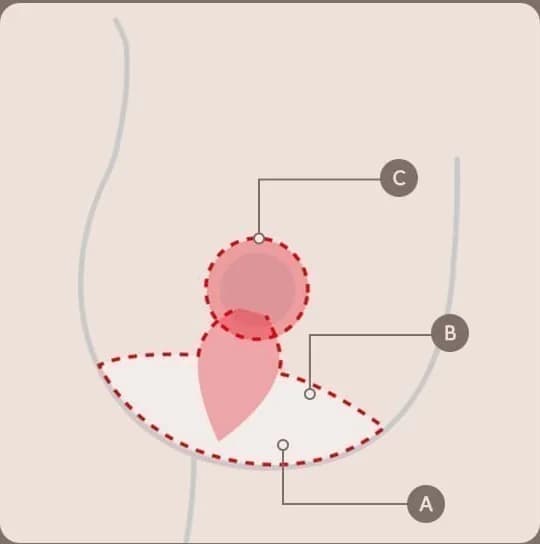
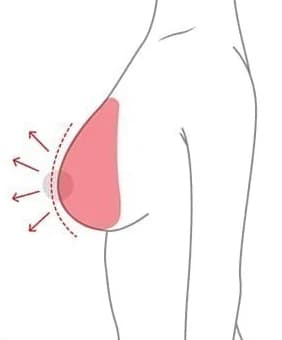
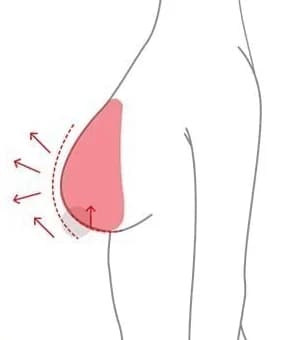
Volume is sufficient and sagging is the only problem. We remove the excess skin and reset the nipple position to bring the shape back.
Lift + Augmentation
Sagging and volume loss are there together. We design the lift and the implant augmentation as one plan, so shape and volume are settled at once.
Reduction Mastopexy
The weight of large breasts has driven the sagging. A reduction mastopexy lifts the breast while taking volume down, and the balance returns.
The Question We Hear Most About Lifts: Scars
A breast lift removes excess skin, so incisions come with it. How we incise is decided by how far the sagging has gone. We show you the expected incision lines during your consultation, and afterwards our care program (scar and swelling management, physical therapy for recovery) helps those scars settle. Telling you exactly where they will sit and how much will remain comes before any promise to hide them.
Before and After Surgery, We Confirm with Examinations
Before surgery we confirm where you stand with blood tests and breast ultrasound. Afterwards we keep watching your breast health with regular check-ups. If your condition is not suited to surgery, we will not recommend it. That is a principle we hold to.
View the Post-Surgery Breast Screening Guide
Ptosis is graded by where the nipple sits
How far the sagging has gone is not judged by eye. It is judged by where the nipple sits relative to the inframammary fold, the horizontal crease where your breast meets the chest wall. If the nipple is above that fold, we do not call it ptosis. If it sits at the level of the fold or a little below, it is mild to moderate. Below the fold, it is severe. This classification has been used in plastic surgery for a long time, so standing in front of a mirror with your arms down will give you a rough sense of it yourself.
There is one more state you should know about: pseudoptosis. The nipple is still above the fold, but the tissue underneath has descended, so the breast looks like it is drooping. It shows up often after pregnancy and breastfeeding. Even when the sagging looks severe, if the nipple position has held, the shape can sometimes come back by adding volume alone, without cutting away much skin. That is why the grade has to be settled first. The grade decides the direction of surgery, the direction decides the size of the incision, and the incision is what decides the size of the scar.
The grade changes the surgical direction
This table puts into writing the order we actually work through in consultation. The final call combines the distance between your nipple and the fold, how far the skin has stretched, and how much glandular tissue is left.
| Nipple position | State | Usual direction | Incision extent |
|---|---|---|---|
| Above the inframammary fold | Not ptosis | Augmentation alone, if volume is lacking | Augmentation incision only |
| Above the fold, tissue descended | Pseudoptosis | Often improves with augmentation alone | Augmentation incision only |
| Close to the level of the fold | Mild to moderate | Augmentation alone, or with a minimal incision lift | Mainly around the areola |
| Below the fold | Severe | A lift is required | Around the areola plus a vertical line |
Why non-surgical methods cannot reverse sagging
It is natural to look for the least demanding option first. But once you know what each method actually acts on, you will not put your expectations in the wrong place.
Chest exercise
The breast is not muscle. It is glandular tissue, fat and skin. Build the pectoralis major and the upper torso does look firmer, but the gland and skin sitting on top of it do not rise with it. Skin that has already stretched does not shrink through exercise.
Thread lift
The technique comes from the face, and the breast carries a different weight. It can help for a while with light sagging, but once the threads are absorbed the tissue goes back. So it has to be repeated, and its long-term durability has been reported as limited.
Fat grafting
It is used to fill an upper pole that looks empty. But it adds volume; it does not raise a nipple that has come down. Some of the grafted fat is absorbed, and what stays follows your weight.
Creams and shaping underwear
These act on the surface of the skin and on the silhouette while you are wearing them. They cannot restore stretched skin or the supporting ligaments themselves. So they are not a realistic way to change the shape you see undressed.
How long does the shape last after a lift
A breast lift is known as the operation that cuts away loose skin. What it really does is reposition tissue that has descended and build a structure to hold that position. So the first variable deciding how long it lasts is not the technique. It is your own tissue. Skin elasticity, how much gland is left, and how far the supporting ligaments have stretched all make the same operation behave differently.
Honestly, no method fixes this for life. Gravity and ageing keep working whether you had surgery or not. A big weight change, or a pregnancy and breastfeeding later on, will stretch the tissue again. That is why we take the aftercare as seriously as the operation. U&U runs a week-by-week recovery programme from straight after surgery through week twelve, and from there we guide you on properly fitted bras and posture. If you are coming from abroad, we separate what has to be done during your stay from what you will carry on yourself once you are home.
Worth preparing before your consultation
Bring the information below and we can grade your case and propose a direction in the very first consultation. Online consultations are read on exactly the same basis.
- Front and side photographs with your arms down. The side view is what shows the relationship between nipple and fold
- Your pregnancy and breastfeeding history, and any plans ahead. If you have plans, the timing itself can change
- How far your weight has swung in recent years. After a large loss, the amount of leftover skin is different
- The bra size you wear now and the volume you want. The product you actually wear tells us more than a number
- Any history of breast disease, recent screening results, and current medication
- How long you can stay in Korea. We build the follow-up schedule around it
Will an implant make it sag even more
This is the worry we hear most often from people considering a lift. If the weight increases, will it not settle further under gravity? Yet with the same implant, some people sag more over time and others hold their shape. That difference does not come from the weight of the implant. It comes from the ligaments inside the breast that carry that weight.
Inside the breast runs a web of supporting ligaments that hold the tissue in place. Severe sagging means those ligaments have stretched that much. So what we look at in consultation is not only how far the breast has descended but how much supporting structure remains. Where enough structure remains, filling the volume alone lifts the shape and holds it. Where the structure has stretched a great deal, adding volume alone cannot carry that weight.
And there is one thing we should say honestly. There is at present no operation that restores a stretched ligament to its original state. A lift is therefore not an operation that repairs the ligaments. It removes the excess skin, gathers the descended tissue back upward and sets a new position. Understanding that distinction is what makes your expectations after surgery accurate.
There are cases that end without a lift
Many people believe that any sagging must be met with a lift. That is not so. If the grade of ptosis is low, or the nipple position is unchanged and only volume has been lost, filling the volume with an implant alone can be enough to bring the shape back up. It is the same principle as air returning form to a deflated balloon.
The reason we take this distinction seriously is the scar. A lift removes excess skin by incision, so we cannot tell you it leaves no scar at all. Where augmentation alone will solve it, we recommend augmentation alone. Not recommending a lift to someone who does not need one is a principle we hold to.
Conversely, where ptosis has already progressed, volume alone has a clear limit. Then we plan augmentation and lift together, and design the incision to the minimum the case requires. Which of the two applies can be judged from photographs and examination by hand, and even in an online consultation we can tell you the direction if we have front and side photographs.
Change after breastfeeding is not explained by sagging alone
During pregnancy and breastfeeding, hormones enlarge the glandular tissue. When feeding stops that tissue shrinks, but the stretched skin does not shrink back at the same speed. So excess skin and emptied volume arrive together. People see the drooping and conclude that a lift is the answer. That is only half right.
Change after breastfeeding must be separated into at least two questions. One is how far the nipple has descended; the other is how much volume has been lost from the upper pole. If the nipple position has not changed much and only the upper pole has emptied, filling the volume is the answer. If the nipple has descended a long way, volume alone will not raise its position. Where both overlap, we plan for both.
So in a post breastfeeding consultation we do not look only at the ptosis grade; we assess volume loss separately. Without that distinction, a lift alone can leave the position raised while the upper pole is still empty, and volume alone can leave the breast filled but still looking low.
What it takes to hold the shape you gained
Once a ligament has stretched it does not come back. So the shape set by surgery has to be supported from outside during recovery in order to settle. The following matters especially for those travelling from abroad.
- Decide in advance what support garment you will wear during recovery. Off the shelf shapewear is often stiff and uncomfortable, so it gets postponed, and postponing it leads to the shape changing
- Get the aftercare split in writing into what must be done within your stay and what you continue on your own after returning home
- Tell us before surgery if you plan significant weight loss. How much skin is left over afterwards differs
- If you are planning a pregnancy, discuss the timing with us. Surgery is not impossible, but the choice of timing changes the result
- Confirm in advance how contact and medical reports are handled if something needs checking after you return home
What changes when a reduction is part of the lift
When the breast is both large and sagging, raising it is not the whole operation: a reduction comes with it. The incision plan changes at that point, and that choice sets both the length of the scar and how much can be removed.
Periareolar incision
Cut along the border of the areola, so the scar shows least. In exchange, the least tissue can be removed, which suits cases where neither the sag nor the size is severe.
Vertical incision
The areolar incision plus a vertical line running below it. The scar is intermediate and more tissue can be removed, which makes it the most commonly used approach today when a reduction is involved.
Inverted-T incision
The vertical line from the areola, plus one more cut following the inframammary fold. It allows the most tissue to be removed and lets the nipple position be corrected as well, but the scar is the longest.
Why we do not push the reduction
Taking too much puts more strain on the blood supply and sensation to the nipple, and it makes the scar more visible. So we set the safe range first and adjust the target size inside it.
The pain after a lift has a different character from augmentation
A lift consists of removing sagging skin, repositioning the nipple and breast upward, and closing the remaining skin. That is a different set of tissues from augmentation, which works on the muscle to make space beneath it. So the pain is felt differently too.
What registers most after a lift is tightness. The lower breast and the area around the areola pull, and the sensation of skin being drawn is strongest when you raise your arm. In reported comparisons, pain after a lift tends to be lower in intensity than after augmentation and to last a shorter time. If an implant is placed at the same time, however, the pattern moves closer to that of augmentation.
For patients travelling from abroad, that difference turns into a scheduling matter. Tightness being the main pain means that movements using the arm broadly — lifting a case into an overhead bin, for instance — are particularly uncomfortable in early recovery. It is worth setting your return date and your luggage weight together during consultation.
What happens to breastfeeding after a lift
A lift divides into two broad routes, and the answer about breastfeeding follows that division: an augmentation lift with an implant, and a lift that includes removing tissue.
In an augmentation lift the implant sits in a plane deeper than the glandular tissue. It does not meet the glands that produce milk or the ducts that carry it, so the size of the implant is not what decides whether breastfeeding is possible. The incision route is a separate matter. Entering through the areola can damage the glandular tissue and the sensory nerves running to the nipple, so if you plan to breastfeed we recommend the axillary or inframammary route.
Where tissue is removed, however, some damage to the ducts is unavoidable. The glandular tissue is not taken out wholesale, but the path the milk travels can be interrupted, so breastfeeding may be affected. That is why it helps to say early in consultation if you are planning children. It is information that can change the surgical approach and the timing themselves.
Breast Lift Cost in Korea: What Sets Your Quote
Because the operation itself changes with your ptosis grade, we do not give a flat price for a breast lift in Korea before an examination. An online consultation tells you the likely direction first; after your in-clinic tests you receive an individual quote that lists what is included. These are the items that actually change a lift quote.
| What is decided | How it changes the quote |
|---|---|
| Ptosis grade and incision extent | Whether the incision stays around the areola or adds a vertical line changes the scope and length of surgery. The grade is judged by where the nipple sits relative to the fold beneath the breast. |
| Lift alone or with augmentation | If volume is lacking and augmentation is added, genuine implants from three manufacturers (Motiva, Mentor, BOUNS) and the augmentation design are added to the quote. |
| Reduction lift | When large breasts are reduced and lifted together, the incision pattern (periareolar, vertical or inverted-T) and how much tissue is removed set the scope of surgery. |
| Previous surgery | If you already have implants, an implant exchange or removal and treatment of the capsule may be added. |
| Tests and anaesthesia | Pre-operative blood tests and breast ultrasound, anaesthesia and monitoring during surgery are part of the quote. |
| Recovery care and your stay | Check that the week-by-week recovery programme from right after surgery to week 12 is included, and budget separately for flights and accommodation. The length of your stay is set in consultation by the number of check-ups needed before you fly home. |
The Questions We Hear Most About Breast Lifts
- Will a lift alone improve the shape, without augmentation?
- If you have enough volume, a lift on its own improves the shape a great deal. But if volume loss is there too, the upper breast can look empty after a lift. So whether to combine augmentation is something we work out with you in consultation.
- I'm planning to have children — can I still get a lift?
- A later pregnancy and breastfeeding can change the shape again. If you have plans, please tell us at your consultation. It is better to set the timing and the method together.
- How much scarring will remain?
- It depends on the incision pattern, whether around the areola, with a vertical line, and so on. The greater the sagging, the wider the incision. At your consultation you will see the expected incision lines drawn for your own condition.
- How long is the recovery period?
- This varies so much from person to person that a single answer would only mislead you. We guide you step by step from early recovery to normal life. If you are flying in from abroad, we build the progress-check schedule around your stay.
- How much does a breast lift cost in Korea?
- It depends on whether you have a lift alone or with augmentation or reduction, how far the incision has to go for your ptosis grade, and whether you already have implants. We do not quote a flat figure before an examination; after your in-clinic tests you receive an individual quote that lists what is included. The items that set the quote are in the cost table on this page, and the cost structure of implant augmentation is in our cost guide.
Learn More About Breast Lifts
Start by Checking Your Degree of Sagging
Front and side photos are enough for an online consultation to tell you how far the sagging has gone and which directions are open to you. And if you do not need a lift, we will say you do not need one. That is a principle we hold to.