
Nipple Surgery in Korea: Inverted Nipple Correction and Areola Reduction
Inverted nipples, nipple size, areola width, accessory breast tissue. For many people the concern is one part of the breast rather than the whole of it. Nipple and areola surgery covers a small area, but it has to handle shape and function at the same time, which makes it delicate work. U&U Plastic Surgery in Gangnam, Seoul treats nothing but breasts, and this guide sets out how nipple surgery in Korea, including inverted nipple correction, is planned at our clinic.
Medically reviewed byKikap Kim · Chief Director, Plastic Surgery
Nipple Surgery in Korea
- Procedures
- Inverted nipple correction, nipple reduction, areola reduction and accessory breast removal. These are often done together with breast surgery.
- Inversion grades
- Grades 1 to 3, set by whether the nipple comes out with stimulation and whether it stays out. Grade 1 can be tried with non-surgical methods; grade 3 is hard to improve without surgery.
- Surgical method
- We use a duct-preserving method: a minimal small incision around the nipple, releasing only the tissue that causes the inversion, then supporting the base so that it does not pull back in.
- Function and breastfeeding
- Methods that preserve function are considered first. If you plan to breastfeed, please tell us at consultation; it can change the choice of method.
- Inverted nipple correction, key facts
- 30 minutes to 1 hour of surgery, general anaesthesia, discharged the same day, no drain, sutures out one week after surgery, follow-up visits at weeks 1, 2, 3, 4 and 12.
- Scars
- The incision mostly uses the border between the nipple and areola so that it shows as little as possible. Results vary, so please check the expected position at consultation.
- Medical team
- Dr. Kikap Kim, Chief Director (plastic surgery; appointed Key Opinion Master by Motiva Korea), plastic surgeons Dr. Jeonghwa Seo and Dr. Yunggi Lee, and Dr. Beomsik Bang, On-Site Director of Breast Surgery.
- Schedule and contact
- As a local procedure it puts relatively little strain on a trip from abroad, and after you fly home progress is followed online. Phone +82-2-544-6996, online consultation, WhatsApp, LINE or WeChat depending on your region, and KakaoTalk. Weekdays 10:00 to 19:00, Fridays until 21:00, Saturdays 10:00 to 16:00.
How a Breast-Only Clinic Approaches Nipple Surgery
The nipple and areola sit at the centre of how the whole breast reads. So this surgery cannot look at that area alone. It has to be designed inside the proportions and balance of the entire breast to come out natural. And because this is where the milk ducts and sensation live, function has to be part of the plan from the start.
U&U Plastic Surgery is a clinic devoted exclusively to the breast. We treat nipple and areola surgery as a field of its own, not as an add-on to breast augmentation. Anything touching function, such as your breastfeeding plans or sensation, we confirm by examination first and then tell you straight.
Procedures We Perform
The area is small, but the range of concerns is not. Each condition calls for a different approach.
Inverted Nipple Correction
Correcting a nipple that has rolled inward. The method changes with the degree of inversion. It can also connect to hygiene and breastfeeding problems, so checking the condition comes first.
Nipple Reduction
For when the nipple is large or long. We reduce it to fit the proportions.
Areola Reduction
We reduce a widened areola to balance with the size of the breast. It is often done alongside breast surgery.
Accessory Breast Removal
Removing accessory breast tissue left in the armpit or nearby. It solves the discomfort in clothing and the hygiene problem together.
How the Process Works for International Patients
Nipple and areola surgery is relatively local, so even when you are flying in, the schedule is lighter than most. The exact scope and timing are set in consultation after we see the condition.
- 01
Online Consultation
Send us photos and tell us which part concerns you, and we will go through the possible methods and the schedule.
- 02
In-Clinic Consultation & Surgery
After confirming the condition, we finalise the scope of surgery. If the schedule allows, we will also tell you whether consultation and surgery can happen in the same visit.
- 03
Recovery & Follow-Up
We check how the recovery is going. Once you are home, we carry on following it online.
Protecting Function Comes First
For the nipple and areola, function matters as much as shape. If you have plans to breastfeed, please tell us at your consultation. That one fact can change which method we choose. From confirming your condition before surgery to the aftercare that follows, including regular breast screening, we guide it as a single process.
See Our Guide to Breast Screening After Surgery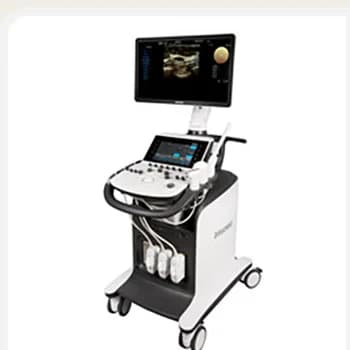
Inverted nipples are graded, and the grade changes the answer
Clinically we divide this into three grades. The criteria are whether the nipple comes out when stimulated, and whether it stays out. Which grade you fall into changes the answer completely.
| Grade | Condition | Usual direction |
|---|---|---|
| Grade 1 | Protrudes with stimulation and stays out for a while | Non-surgical measures can be tried first |
| Grade 2 | Protrudes briefly with stimulation but soon retracts | Partial improvement is possible, but surgery is sometimes advised |
| Grade 3 | Barely protrudes even with stimulation, and retracts again when pulled out | Difficult to improve by anything other than surgery |
An inverted nipple is not only about appearance
In an inverted area, discharge cannot drain out properly. The discharge and dead skin left inside make a good environment for bacteria to grow. That is why odour and inflammation can keep coming back. People often come to us worried about how it looks, and only in consultation does it emerge that the hygiene problem has been bothering them for years.
For anyone planning to breastfeed there is one more thing. If the fibrous bands pulling the nipple inward also narrow the openings of the ducts, milk can flow poorly during feeding, pool, and lead to mastitis. This is not something you can judge from reviews or other people's accounts. It takes a breast-surgical examination as well as a plastic-surgical view to know whether your inversion is at a stage that will affect function.
Preserve the ducts, or divide them
Inverted nipple surgery splits into two broad routes. The difference is not the size of the incision. It is how the milk ducts, the channels the milk travels through, are handled.
Duct dividing technique
The tissue causing the inversion is cut through along with the ducts. The operation is relatively simple and the recurrence rate is on the low side. The trade-off is that breastfeeding after childbirth may become difficult.
Duct preserving technique
The ducts are left alone, and only the fibrous bands pulling the nipple and the shortened tissue are selected and released. This preserves the possibility of breastfeeding, but the result turns on anatomical understanding and fine handling.
What U&U does
We use the duct-preserving method. We make the smallest possible incisions around the nipple, release only the tissue causing the inversion with precision, and then support what has been released from underneath with sutures so it does not roll back in.
Thinking about recurrence
Choosing a technique is not where this ends. The breast changes a great deal through pregnancy and childbirth, and inversion sometimes returns at that point. It is worth asking at your consultation how your condition will be followed up until then.
How breast checks continue before and after surgery
The nipple and areola are where the glands and ducts converge. So surgery here is a question of breast health as much as it is a cosmetic one. Before surgery we have to distinguish whether this is simple inversion or something with another cause. After surgery we have to watch both the return of the inversion and the state of the gland.
At U&U a breast surgeon is on site. Breast ultrasound, mammography, mammotome and MastoCheck all happen in one place. It is a structure we built so that you can decide on objective grounds, both before you commit to surgery and after. For those coming from abroad, the first thing we check is whether screening and surgery can be scheduled together inside a short stay.
Worth checking before your consultation
Even in an online consultation, the items below let us grade the condition and propose a method.
- Whether both sides are the same or different. Inversion on one side only is not unusual
- Whether the nipple comes out with stimulation, and how long it stays out
- Whether discharge, odour or inflammation have recurred, and how often
- Whether you plan to breastfeed. This one fact changes the surgical method itself
- Any previous surgery on the same area, and which method was used
- How long you can stay in Korea. Being a local operation, the scheduling load is on the lighter side
What the day itself looks like, and what follows
The first thing patients travelling in ask about is how long they need to stay. Below is the baseline schedule for inverted nipple correction performed on its own. It changes if you combine it with other breast surgery.
| Item | Inverted nipple correction |
|---|---|
| Operating time | 30 minutes to 1 hour |
| Anaesthesia | General anaesthesia |
| Admission | Discharged the same day |
| Drain | None |
| Massage | Not required |
| Suture removal | One week after surgery |
| Follow-up visits | Weeks 1, 2, 3, 4 and 12 |
Sometimes augmentation alone corrects it
If you are also considering breast augmentation, try changing the order in which you think about this. When the nipple comes back out under light stimulation, the added volume from augmentation can push it forward and the inversion improves along with it. In that case we do not touch the nipple at all.
So when someone asks about augmentation and inversion correction together, we start by grading the inversion. If augmentation alone will resolve it, operating on the nipple as well only adds an incision that did not need to exist. If, on the other hand, the nipple barely comes out under stimulation, augmentation alone will not be enough and it is better to correct it at the same time using a duct-preserving method.
This call is hard to make from photographs. The criteria are how the nipple responds to stimulation and how long it stays out once it does, and that has to be seen directly. Online we narrow the likely range for you; the final decision is made at the in-person consultation.
"My nipples are large" usually means two different things
When we listen closely to patients asking about nipple reduction, two separate complaints are mixed together. One is length, the other is width. They bother people in different ways and they are reduced differently. That is why the first thing we ask is which of the two troubles you more.
We also separate when it started. Some people have always had them this size; for others they changed through pregnancy and breastfeeding. In the second case it is rarely the nipple alone. The areola has often widened along with it, or the breast as a whole has dropped. Reducing only the nipple then leaves the proportions looking stranger than before, so we assess the areola and the whole breast together.
There is also a limit on how much we take. If you think only about visible size, smaller always looks better. But the ducts run through the nipple and the nerves responsible for sensation are concentrated there. We fix the range in which function can be preserved first, and reduce within it. If you plan to breastfeed, that range narrows further.
Accessory breast tissue is not fat
Some patients arrive after trying to have a full underarm area treated with liposuction. Accessory breast is not that kind of tissue.
What it is
It is breast tissue left along the line on which the breasts form during embryonic development, most often sitting near the armpit. Unlike fat, it does not change much when you lose weight.
Why it changes through the month
Because it is glandular tissue, it responds to the same hormonal cycle as the breast. That is why some people find it swells, aches, or feels firmer at certain points in the month.
What actually bothers people
The most common complaint is that the underarm line never looks clean in clothes. Swelling, chafing and hygiene problems sometimes come with it.
Care after removal
The armpit moves every time you use your arm, so firmness is common in the early weeks. Where that firmness appears, we use radiofrequency care in a limited way to help it settle.
What we tell you before you decide
Calling something a small operation does not mean it carries no risk. Bleeding, infection and inflammation can occur in nipple and areola surgery too, and the degree varies between people. An area that has been inverted is one where discharge already tended to collect, which makes early aftercare especially decisive here.
We also state the chance of recurrence up front. We release the tissue that was pulling the nipple inward and support it underneath with sutures, but pregnancy and childbirth change the breast substantially, and inversion sometimes returns at that point. This is why we say not to stop at the choice of technique, and to look at whether the clinic will still be following your condition that far out.
Changes in sensation are possible as well. They usually recover with time, but this varies. We aim to preserve breastfeeding by keeping the ducts intact, but we do not tell anyone it is guaranteed in every case. We check what your condition actually is first, then tell you the range of what is possible as it stands.
Planning your stay
This is a localised operation, so the burden is lighter than most, but it is better to stay through suture removal. Use the points below as a starting frame.
- Sutures come out one week after surgery. Staying until then is the safest arrangement
- If your trip is shorter, we prepare what your doctor at home needs in order to remove them there
- Follow-ups fall at weeks 1, 2, 3, 4 and 12. Once you are home we continue by photograph and online
- Combining it with breast surgery changes the schedule. If augmentation or a lift is part of your plan, we build the timeline around that
- It is done under general anaesthesia and you are discharged the same day. We set your return flight together, allowing for the anaesthetic and the early swelling
- Accessory breast removal involves an area you move with every arm motion, so avoid a schedule that has you carrying heavy luggage
We map accessory breast tissue before removing it
A full underarm is not automatically accessory breast. Sometimes it is fat, sometimes glandular tissue, sometimes a mix of both. Because the approach changes with what is there and how much, we do not judge it by looking. We map the extent on ultrasound first.
There is a second reason to do that. Accessory breast is glandular tissue, so it goes through the same changes as the breast itself. Anything that can arise in breast tissue can arise here. That is why looking at the current state of the tissue comes before deciding to remove it. A breast surgeon is on site at U&U, so that check happens in the same visit.
The incision follows the crease of the armpit, where the skin folds when your arm is down, so the scar sits somewhere it is not easily noticed. The armpit is pulled every time you use your arm, though, which makes early aftercare decisive for how that scar settles. When you can use your arm normally again is set from how your recovery is going.
When it is better not to operate yet
There are consultations where we tell you to postpone. Pregnancy and breastfeeding are the clearest cases. During that period the breast is still changing in size and tissue, so a result fitted now will not stay as it is. That goes double for the nipple and areola.
The same applies when there is active inflammation in the inverted area. Settling the inflammation first and operating afterwards is better for both the result and the recovery. However urgent it feels, we do not reverse that order.
If breastfeeding is in your near-term plans, the choice of method itself changes. Our answer differs depending on whether that is several years away or next year, so tell us your plan and we will set the timing and the method around it together.
The Most Common Questions About Nipple & Areola Surgery
- Can I still breastfeed after inverted nipple correction?
- It depends on the degree of inversion and the correction method. If you have plans to breastfeed, please tell us at your consultation. We start by looking at the methods that preserve function.
- Can it be done together with breast augmentation?
- Yes. Areola reduction and inverted nipple correction are often done alongside breast surgery. We will go through the pros and cons of combining them at your consultation.
- Will the scars be noticeable?
- Most incisions use the border of the nipple and areola, designed so they show as little as possible. Since this varies from person to person, please check the expected position for yourself at your consultation.
- How long does recovery take?
- It is a local operation, so the return to daily life is quick. What matters, given where it is, is the early care. We will set your progress-check schedule around your stay.
- How much does it cost?
- It depends on the type of surgery (inversion correction, reduction, accessory breast), the scope, and whether you are having anything else done at the same time. We will give you a personal estimate at your consultation.
Guides Worth Reading Together
The Smaller the Concern, the Easier It Is to Ask
A single photo is enough to start a consultation. If your condition does not need surgery, we will say it does not. Telling you only as much as you actually need is our principle.