
Breast Asymmetry Correction in Korea: Being Different from Side to Side Is Not Unusual
Most people have some difference between sides. The problem is not the difference itself, but when it starts dictating what you wear, how you stand, and how your day feels.
Medically reviewed byKikap Kim · Chief Director, Plastic Surgery
Breast Asymmetry Correction at U&U Plastic Surgery at a Glance
- What differs
- We first separate what differs and by how much: size, shape, nipple height, or the position of the fold under the breast, and we also check for differences in the chest wall itself. Nipple height, the under-breast fold, chest wall tilt, and the direction the nipple points cannot be fixed with implant size.
- Correction methods
- We combine different implants on each side, surgery on one side only, an added lift, and reduction or fat grafting according to the difference. For size we first consider different implants or enlarging only the smaller side, for height a lift, and for shape designing the implant pocket boundaries differently on each side.
- Measured on each side
- At U&U each side is measured and recorded on its own: breast width, collarbone to nipple, nipple to the fold beneath the breast, and tissue thickness. The in-house breast surgeon reviews the breast ultrasound and blood tests for each side before surgery.
- Goal
- We do not promise complete symmetry; the goal is for the breasts to look balanced. Before surgery we talk through how much the difference can be reduced and what may remain.
- One side or both
- If you like the other side as it is, U&U can operate on one side only. Each side may change at its own pace over the years, so the plan is made with the pair in mind as it will look later, not only on the day of surgery.
- After surgery
- Swelling and recovery can progress at different speeds on each side, so it is natural for the sides to look different during recovery. The final assessment is made months later.
- Preparation and schedule
- Send a front photo and photos of both sides, a note on the difference you notice and when it began, and any previous surgery records, and we will first outline the expected scope and the schedule you need. If a lift or reduction is included, recovery needs more time.
- Medical team
- Dr. Kikap Kim, Chief Director (plastic surgery; appointed Key Opinion Master by Motiva Korea), plastic surgeons Dr. Jeonghwa Seo and Dr. Yunggi Lee, and Dr. Beomsik Bang, On-Site Director of Breast Surgery.
- Consultation
- Phone +82-2-544-6996, online consultation, WhatsApp, LINE or WeChat depending on your region, and KakaoTalk. Weekdays 10:00 to 19:00, Fridays until 21:00.
First, separate out what is actually different
The single word "uneven breasts" holds several different situations at once. Different in size. Similar in size but different in shape. Different in height, meaning where the nipple sits. Different in where the fold under the breast runs. And most of the time, several of those overlapping.
The approach changes completely depending on which it is. A difference in size is matched with volume, but a difference in height is not solved with volume — the tissue has to be raised. So the first thing we do at consultation is put the photographs up and separate out which element differs, and by how much.
One more thing we check is the chest wall itself. Sometimes the breasts look different because of asymmetry in the ribs or spine, and in that case working on the breasts alone will not produce the result you want. We tell you that in advance.
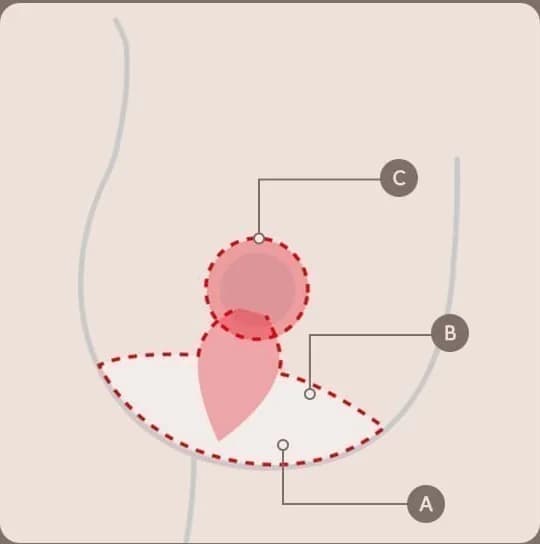
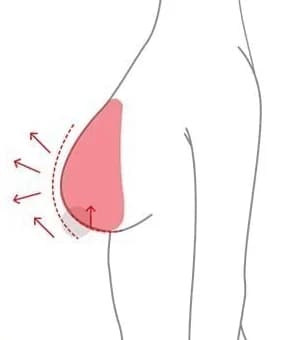
The methods used in correction
It is rare for only one to be used. What is combined depends on which elements differ, and by how much.
Different implants on each side
Implants of different size or shape on each side, matching the volume difference. The more finely subdivided the range, the more precise the adjustment can be.
Operating on one side only
If the difference sits on one side and you are happy with the other, doing one side alone is an option. The difference over time does have to be weighed as well, though.
With a lift
If the main issue is a difference in height, position has to be raised rather than volume added. That means lifting one side, or setting the extent of the lift differently on each.
Reduction or fat grafting
Reducing the larger side to match, or grafting your own fat to the smaller side to fill a fine difference, are sometimes considered.
The direction considered first, by type
This is a rough grouping for understanding. The actual plan is set after measurements are taken and tissue condition assessed.
| What differs | Direction considered first | Also to weigh |
|---|---|---|
| Size (volume) | Different implants on each side, or augmenting only the smaller side | Where tissue volume differs, the same cc gives a different result. |
| Height (nipple position) | Lifting the lower side, or adjusting the extent of lift on each | Adding volume does not raise position. |
| Shape (contour, inframammary fold) | Designing the pocket to different extents on each side | A difference in fold level shows more once you are dressed. |
| Sagging on one side only | Lifting the sagging side, adjusting the other if needed | Sagging can widen the gap further over time. |
Perfect symmetry is not the goal
We do not promise perfect symmetry. Human bodies are not exactly the same on both sides, and forcing them to match tends to look unnatural. The aim is not "identical" but "reads as balanced".
There are questions we end up asking at almost every consultation. Whether the difference bothering you is as visible to other people. What it looks like with clothes on. How much of it would have to go before you were satisfied. Set that standard beforehand or the small difference that remains after surgery keeps catching your eye.
So before surgery we talk through the expected result and the difference that may remain. Being honest about the range that can be closed is, we think, what separates satisfaction from disappointment.
Worth bringing to consultation
These make the assessment far quicker, even in a short consultation.
- A front photograph and both side photographs. Arms down, in a natural stance.
- A note on which side differs and how, in your own words.
- When you first noticed the difference. Since puberty, or after childbirth or breastfeeding.
- How you currently compensate when wearing a bra (padding one side, and so on).
- Records of any previous breast surgery.
- Roughly when and by how much your weight has changed, if it has.
What is checked before surgery
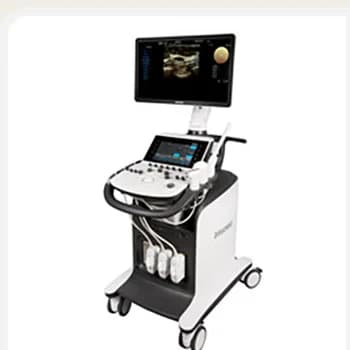
Asymmetry correction is planned on the premise that the tissue differs between sides. So before surgery we assess each side separately with breast ultrasound and blood tests. Findings that exist on only one side do turn up, and when they do the plan changes.
U&U has both plastic surgeons and breast surgeons on staff. When a difference has appeared recently or grown quickly, we do not treat it as a question of shape alone; we check the state of the breast itself first. There genuinely are situations where that distinction matters.
A left-right difference usually comes from one of these four
Knowing where it came from matters because it decides whether the current state will widen further or stop here.
| Background | How it shows | What it means for the plan |
|---|---|---|
| A developmental difference you were born with | The two sides grew differently through puberty and settled that way | The state is stable, so it can be designed around as it is today |
| Childbirth and breastfeeding | One side stretched more, or lost tissue differently | Volume alone will not match it; sagging has to be looked at too |
| A large change in weight | Fat came off or went on unevenly between the sides | Better to plan after the weight has settled |
| Ribcage and posture | The ribs or spine are asymmetric, so the breasts read as different | Working on the breasts alone will not give the result you want |
What photographs can and cannot tell us
Send photographs to an online consultation and we see a fair amount. The rough difference in size between the sides, whether the nipples sit at different heights, whether the folds underneath are out of line, whether sagging is on one side only. All of that reads from a photograph.
There are things a photograph will not give us, though. How thick the tissue is, how much slack the skin has, whether the ribcage itself is tilted. Those have to be felt and measured. Two people with the same photograph get different plans if those three differ.
So in an online consultation we go as far as the possible direction and a rough range, and settle it after measuring in person. That is why we will not name a cc figure off a photograph.
Four things volume will not fix
People often arrive assuming it is just a matter of going bigger, and the direction changes. Below are the items implant size does not settle.
The height of the nipple
If one nipple sits lower, adding volume leaves the position exactly where it was. Moving the position up belongs in the territory of a lift.
The fold under the breast
When the two folds sit at different heights, clothing makes it more obvious, not less. That is a matter of redrawing the lower border of the pocket.
The tilt of the ribcage
If the ribs or spine are asymmetric, the same implant on both sides still reads differently. We say so beforehand and design with it factored in.
Which way the nipple points
Sometimes it is not size at all: the nipple points outward or downward and that is what makes the difference look large. That calls for repositioning tissue rather than adding volume.
What it means to design the two sides differently
Correcting asymmetry is not performing the same operation on both sides. It is building a separate plan for the left and for the right, so that the two together read as balanced.
So there are several items that end up different between the sides. Implant size and shape can differ. The extent of the pocket the implant sits in, particularly the lower and inner borders, is drawn differently side to side. Sometimes a lift goes on one side only, or on both but to different extents.
For that design to be possible, both sides have to be measured separately. Breast width, tissue thickness, distance to the inframammary fold, skin slack, recorded one side at a time. Only then is it settled which item goes how differently.
The period when the two sides look different after surgery
During recovery, the sides looking different is the natural state of things. Knowing that in advance takes a lot of the worry out of it.
- Swelling does not go down at the same rate on both sides. One settles first.
- If the operation was larger on one side, that side recovers more slowly.
- How long the implant takes to settle also differs between the sides.
- If a lift was done on one side only, that scar matures on its own timeline.
- Lying down and standing up can give a different impression of the two sides.
- The final judgement comes months later. We do not read the result from the difference before that.
One side, or both
If you are happy with the other side, doing one is the natural choice. One recovery, and the cost that goes with it. In that situation we recommend one side too.
One thing you should know beforehand, though. With an implant on one side and your own tissue on the other, the two change at different rates as time passes. Your own tissue drops with age and weight, and the side with the implant moves differently. There is no guarantee that the balance set today reads the same in a few years.
So at the consultation we put two options side by side. Touching as little as possible now, or designing both sides with the balance a few years out in mind. Which one fits depends on your age, your tissue, and what you weigh more heavily.
The items measured separately on each side
This table is what an asymmetry consultation actually consists of. Write the two sides down separately and the difference becomes visible as numbers.
| What we measure | Why each side separately | How it gets used |
|---|---|---|
| Breast width | Different widths allow different implant diameters | Whether the two sides take different sizes is decided here |
| Collarbone to nipple | Puts the nipple height difference into numbers | Settles whether a lift is needed, and on which side |
| Nipple to the fold underneath | Shows how differently the lower pole is stretched on each side | The basis for drawing the lower border of the pocket differently |
| Tissue thickness | The same implant shows more through thin tissue | Used to decide implant shape and which plane it goes in |
Part of the asymmetry comes from below the breast
Sometimes looking only at the breasts does not explain why the two sides differ, because the chest wall the breasts sit on differs left to right. If one set of ribs projects slightly further forward, or the spine curves to one side, the two breasts can be the same size and still not look it.
In that situation, matching only the breasts can make things look stranger. If the foundation underneath is tilted and you make what sits on top identical, the tilt shows through. So at the consultation we look not only at breast measurements but at the difference between the two sides of the chest wall, shoulder height and posture. It is also why we ask for both front and side photographs.
A difference that comes from the foundation cannot be removed entirely by surgery. What we do instead is tell you in advance how far it can be reduced. That usually means using different implant specifications or placement on the two sides to narrow the visual gap. This is the basis for what we keep repeating: the goal is not perfect symmetry but a level at which the difference does not read through clothing.
A matched pair can drift apart again over time
Once surgery has matched the two sides, it is easy to assume that state is now fixed. It is not. If the tissue on the two sides was different to begin with, the changes that come will also show up differently on each side. As weight goes up and down, through pregnancy and breastfeeding, as tissue changes with age, that difference can reappear.
This is not because the surgery went wrong; it is because the body keeps changing. So we do not design for symmetry on the day of surgery alone. We design around how each side will respond to the changes still ahead. Not forcing an oversized specification into the side with thinner tissue is part of that same judgement.
That is also why we ask you to come for regular checks. If a gap is caught as it starts to open, there is a range that can still be handled with care and management; left much longer, some cases end up needing surgery to correct. Setting out what to look for when you have your checks done at home is part of the same reasoning.
The questions we are asked most about breast asymmetry
- How much of a difference makes it a case for correction?
- There is no numerical threshold. Whether it shows when you are dressed and whether it occupies your attention are the practical measures. Conversely, if a difference exists but does not trouble you, there is no reason to operate.
- Can just one side be operated on?
- Yes. But operating on one side means the two can change differently as time passes. It is better to decide with not only today's balance but the balance in a few years in view. At the consultation we explain the difference between the two choices.
- Will they be exactly the same after surgery?
- We do not promise perfect symmetry. Bodies are not exactly the same on both sides to begin with, and forcing a match looks unnatural. We tell you concretely, before surgery, how far the difference can realistically be closed.
- Can a difference in nipple size or position be corrected too?
- Yes. Differences in the size or position of the nipple and areola are also correctable. The method differs from volume correction, so we set the priority according to which bothers you more.
- The difference grew after pregnancy and breastfeeding.
- That is common. After breastfeeding, tissue volume and the degree of sagging often change differently on each side. In that case volume alone rarely matches them, and a lift usually comes into consideration alongside it.
- I am travelling from abroad — how do I plan the schedule?
- It depends on the extent of the correction. If a lift or reduction is involved, recovery needs more room. Send photographs and we will outline the likely extent and the schedule it would need.
- Is it all right to use different implant sizes on the two sides?
- It is. In asymmetry correction that is closer to standard than not. The more finely graded the product range, the finer the adjustment available. That said, when the tissue volume differs between sides, the same difference in implants reads differently, so we settle it after measuring.
- I think it comes from my ribcage being crooked. Can surgery help?
- Breast surgery cannot change the ribcage itself. What it can do is reduce the visible difference by designing the two sides around that tilt. How far it can be reduced is something we tell you specifically after measuring.
- Can fat grafting alone even it out?
- If the difference is small, it is worth considering. But how much of the graft takes varies from person to person, so we cannot tell you it fills the gap in one go. When the difference is large, looking at an implant or a lift alongside is the realistic route.
- The two sides look more different right after surgery.
- That is normal during recovery. Swelling does not subside at the same rate on both sides, and when the operation was larger on one side, so is the recovery. The final judgement comes months later, and we do not read the result from the difference before that.
Worth reading alongside asymmetry
Guides by Procedure
- Breast Augmentation in Korea
- Breast Augmentation Cost Guide — Quote Structure & Country Comparison
- Breast Revision Surgery — Capsular Contracture & Implant Replacement
- Breast Lift (Mastopexy) — Correcting Sagging Breasts
- Nipple & Areola Surgery — Inverted Nipples & Accessory Breasts
- Motiva Breast Augmentation
- Post-Surgery Breast Screening — Mammotome & Ultrasound
- Fat Transfer & Hybrid Breast Augmentation
Let us start by separating out what differs, and by how much
Send a front photograph and both side views, and we will set out which elements differ and how they could be matched. If it is not at a level that needs surgery, we will say so.