
Breast Implant Size Guide: Not a Number of cc, but the Size Your Body Can Carry
This breast implant size guide is written by U&U Plastic Surgery, a breast-only clinic in Gangnam, Seoul, for patients planning breast augmentation in Korea. Choosing a size is not picking the figure you want. It is finding the most natural point inside the range your body allows. Here is what sets that range.
Medically reviewed byKikap Kim · Chief Director, Plastic Surgery
Deciding Breast Implant Size at U&U Plastic Surgery at a Glance
- The order of decisions
- We measure your body before talking about cc. The width of the breast base, the distance between the nipples, how much the skin stretches and how much breast tissue you already have limit the implant's diameter and projection, and the cc follows from that.
- Three numbers
- Implant size is set by volume (cc), diameter and projection. The diameter is set by your chest, so it is kept slightly narrower than the width the breast sits on; at the same volume, the higher the projection, the narrower the diameter.
- No cup promises
- cc and cup size do not map one to one, and bra cup labels differ between brands, so we do not promise a cup size. Candidates narrowed down by your measurements are tried on so we can judge the look together.
- Implants and profile
- We stock genuine Motiva, Mentor and BOUNS implants, so form and profile (low, high) can be compared within the same volume. Teardrop (anatomical) implants, made with a textured surface to hold their shape, are not something we currently recommend.
- Thin or sagging tissue
- With thin tissue we look at the likelihood of rippling and at how much tissue will cover the implant before the cc, and where needed we consider covering the implant with your own fat. If there is sagging, we first decide whether a lift should be part of the plan instead of a larger size.
- Weight and posture
- A larger size also means more weight, which can load the neck and shoulders, so posture correction starts from week 1 after surgery. We advise wearing a support bra for about 3 weeks, and bra education is part of aftercare.
- Breastfeeding and checkups
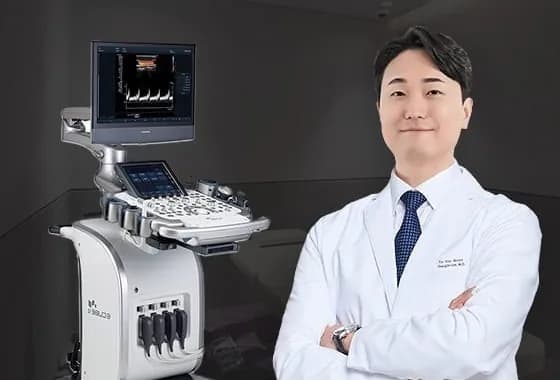
- Size itself does not decide whether you can breastfeed; the incision site does. Before surgery your condition is checked with blood tests and breast ultrasound and reviewed with the in-house breast surgeon, and implant ultrasound checkups continue after surgery.
- Medical team
- Dr. Kikap Kim, Chief Director (plastic surgery; appointed Key Opinion Master by Motiva Korea), plastic surgeons Dr. Jeonghwa Seo and Dr. Yunggi Lee, and Dr. Beomsik Bang, On-Site Director of Breast Surgery.
- Consultation
- Front and side photos with your height and weight let us suggest a rough direction online; exact measurements are taken at your in-person consultation. Phone +82-2-544-6996, online consultation, WhatsApp, LINE or WeChat depending on your region, and KakaoTalk. Weekdays 10:00 to 19:00, Fridays until 21:00.
Why cc is not the answer
The same 300cc implant looks completely different on different people. A volume that goes unnoticed on a wide chest can look excessive on a narrow one, and if skin and tissue are thin, the same size shows its outline more. So there is no correct answer to "how many cc" — and if somewhere gives you one, that number was produced without looking at your body.
In a real consultation, the first thing measured is not the cup size you want but the dimensions of your body. The base width of the breast, the distance between the nipples, how much the skin stretches, the amount of existing breast tissue — these values set the limit on the diameter and height of implant that can be used, and the cc figure follows from that.
Four things that set the range
These are what we actually check at consultation. Going outside this range works against both the shape and safety.
Chest and breast base width
The diameter of the implant cannot exceed the base the breast sits on. If it does, it spreads sideways or looks pushed toward the armpit.
Thickness of skin and soft tissue
If the tissue covering it is thin, the edge of the implant can be felt or seen. Thickness changes both the layer of placement and the upper limit of size.
Amount of existing breast tissue
With a reasonable amount of your own tissue, the same volume blends far more naturally. The less tissue there is, the more conservative we are with size.
Skin laxity and degree of sagging
If there is sagging, going bigger does not solve it. The first decision is whether a lift needs to be considered.
What changes at the same cc — shape and profile
Even at equal volume, the form of the implant and how far it projects change the finished impression.
| Type | Characteristics | Considered when |
|---|---|---|
| Round | Symmetrical top to bottom. Relatively good at showing fullness in the upper breast. | Emptiness in the upper breast is the main concern |
| Teardrop (anatomical) | Fuller at the lower part. But this class of implant was given a textured surface to hold that orientation, and its use has fallen sharply. | We no longer recommend it |
| Low profile | Spreads the same volume more widely, so projection is smaller. | The chest is wide and heavy projection is unwanted |
| High profile | Narrower base diameter with more forward projection. | The breast base is narrow but volume is still wanted |
How to check it for yourself instead of guessing at numbers
At consultation we look at the images you have in mind, narrow the possible range using your measurements, and then physically try the candidates within that range so you can see the impression. The size you imagine from a photograph and the size against your own body are usually different — closing that gap is the point of the consultation.
U&U works with genuine implants from three manufacturers, Motiva, Mentor and BOUNS, so within the same volume you can compare choices of form and profile. The standard is not what is fashionable but what fits your measurements.
Common mistakes when deciding on size
The ideas we most often find ourselves correcting in consultation.
- Taking someone else's cc as your target — the same number gives a different result on a different body.
- Mistaking the swollen state right after surgery for the final size — the shape settles over several months.
- Choosing the maximum possible — if the tissue cannot carry it, sagging and distortion become more likely over time.
- Trying to cover sagging with volume — a breast that needs a lift is not solved by size.
- Using bra cup labels as the reference — cup sizing differs by brand, so it cannot serve as a standard.
After the decision, care is what protects the size
Even with the right size chosen, the shape can change if recovery care goes wrong. Alongside stage-matched aftercare, U&U runs bra education — because wearing the right underwear during recovery and afterwards genuinely affects how the shape holds.
Before surgery we confirm your condition with blood tests and breast ultrasound, and afterwards we monitor it with regular check-ups including implant ultrasound. Choosing a size is one part of that whole process.
Why the cc you saw in a review cannot be your answer
Almost everyone researching size starts with reviews. You look for someone who seems similar to you, check what volume they chose, and read through several accounts to see whether 20cc or 30cc changes the outcome. It is a natural place to start, but it rarely produces an answer.
That is because the implant is not the only thing deciding shape and feel. The shape of the breast before surgery, the plane the implant sits in, the silhouette running from shoulder to hip, the amount of breast tissue, how the fascia is handled — all of it enters the result. None of that appears in a review, and none of it could.
So the same implant at the same volume does not produce a similar shape. The number in a review is a conclusion drawn from that person's anatomy, not a benchmark for size. It helps to change what you look for: instead of how many cc, ask which condition of their own body led them there. That question is far more useful in consultation.
Size is set by three numbers, not by cc alone
Three values make up an implant's size: volume (cc), diameter and height. Search results almost only ever mention cc, so how much the other two shape the result stays largely unknown. For reference, volume is usually described as small at 150~200cc, medium at 300~350cc and large above 400cc. But that is a name for volume, not a name for shape.
Diameter is not something you pick; your chest sets it. It is generally kept slightly narrower than the width the breast sits on. Height means how far the implant projects forward. And when volume is fixed, those two push against each other: as height goes up the diameter narrows, and as height comes down the diameter widens.
So at the same 300cc, a narrow tall implant and a wide low one build entirely different breasts. The first reads as projection forward; the second spreads sideways and reads as fullness. If you arrive at consultation having fixed only the cc, you pass through without ever learning this choice was still open.
The same cc, two different outcomes
Here is what changes when volume is held constant and only height moves. This is not about one being better; it is about the choice that remains after the cc is settled.
| What changes | Taller with a narrow diameter | Lower with a wide diameter |
|---|---|---|
| Forward projection | The nipple projects considerably further forward. | Less forward projection, and a smaller change in chest circumference. |
| Change in cup label | The cup number rises comparatively more. | The cup number rises less. |
| Overall impression | The sense of fullness across the whole breast is reduced. | It looks fuller than the cup number suggests. |
| Considered when | The base of the breast is on the narrow side | The chest is broad and the frame is larger |
Why clinics recommend different volumes
One clinic says up to 300cc is possible; another says 275cc is the maximum. We are often asked which is right, and usually both are. There is one value the two assessed differently: the thickness and elasticity of the existing breast tissue.
Chest measurements are read off a tape, so they do not vary much between clinics. How far the tissue can stretch, on the other hand, is not read off a scale. It is judged by hand, and that judgement takes accumulated operating experience. Even on a broad chest, tight tissue can be stretched past its limit by a large implant and lose its elasticity. There is no rule that a larger chest requires a larger implant.
So if you heard two different numbers, neither side lied; their reading of your tissue differed. What to check is not the number but its reasoning. Ask why that ceiling was set and what specifically is a concern above it. The depth of the judgement shows itself in the answer.
If your tissue is thin, look at this before size
When there is little breast tissue and the skin is thin, rippling, where folds in the implant become visible or palpable, becomes comparatively more likely. So for someone with less tissue, the first question is not how many cc but whether the tissue you have can cover it.
Even so, outcomes differ between people who look similar on paper, because skin thickness, the amount of fat layer and chest shape are all different. Where tissue is sufficient, the implant alone can be expected to give a natural result; where the skin is thin or the fat layer is scarce, we may also consider laying fat over the implant as an additional cover.
In short, having little tissue does not mean a larger size is impossible, nor that it will inevitably look done. It is a question of choosing the method that fits the tissue you have now. Size follows once that method is settled.
Teardrop or round: the type is not what decides naturalness
First, a common confusion. A teardrop-shaped breast and a teardrop implant are different things. The former describes a finished silhouette that falls away like a drop of water; the latter is an implant built to be gentle at the top with the volume loaded low. Wanting the shape does not require the implant.
Compared as implants: the teardrop is gentle above with volume below, while the round is an even semicircle top and bottom. In theory the teardrop is said to build a more natural line, but because it has to hold its form, it tends to feel somewhat firmer than a round implant.
The more important difference is orientation. A round implant has no top or bottom, so a slight rotation inside does not show. A teardrop has a fixed direction, which adds a condition: that direction and position must be maintained. This is why it is considered the harder implant to handle. On top of that, the class of implants given a textured surface to hold their form has fallen sharply out of use worldwide over safety concerns, and we no longer recommend teardrop implants.
Does that make round implants unnatural? No. Today's round implants move with gravity inside the body: lying down they spread naturally, standing up the volume gathers low and falls into a silhouette close to a teardrop. Ultimately a natural line comes from dozens of anatomical factors acting together — the structure of the chest, the amount of breast tissue, the thickness of the skin, the plane the implant sits in. That is why the same implant looks natural on one person and not on another.
What rarely gets counted when choosing size: weight
Breast augmentation puts two implants weighing several hundred grams each into the body. Going up in size adds not only volume but weight. Yet weight is rarely the term in which a size consultation is conducted.
Weight pulls forward with gravity. Sustained, that loads the neck, shoulders and back, and can lead to postural changes such as shoulders rolling forward or the head carrying forward. So we do not prepare only the shape: posture correction begins in the first week after surgery, so the body can carry that weight.
Underwear connects to size for the same reason. A breast with an implant moves in the direction gravity pulls it, so wearing a properly fitted bra during recovery and afterwards genuinely affects whether the shape you settled on holds. We advise wearing a support bra for about three weeks, after which a bra designer guides fitting for your frame.
Questions worth asking in a size consultation
Knowing how a number was reached helps far more than walking out holding the number. These are questions you can ask at any clinic.
- How wide is the base of my breast, and how far can the implant diameter go within it?
- How thick and elastic is my tissue, and how does that narrow the upper limit?
- Within the same cc, how many height and diameter combinations are possible, and what impression does each give?
- If I went one step larger than what you recommend, what specifically would concern you?
- Given my tissue, how likely is rippling, and what could be considered to reduce it?
- At this size, how much weight is that, and what should I prepare for during recovery?
Does breastfeeding or screening change the size decision?
This is the concern we hear most often from patients who are planning children. Will a larger size make breastfeeding harder? The short answer is that size itself is not what decides whether breastfeeding is possible.
The implant sits in a plane deeper than the glandular tissue that produces milk. It does not meet the glands or the ducts the milk travels through, so whether it is placed large or small does not in itself block feeding. What actually differs is the incision route, not the size. Entering through the areola can damage the glandular tissue and the sensory nerves running to the nipple, so if you plan to breastfeed we recommend the axillary or inframammary route.
Screening is a separate matter. It is true that an implant makes breast screening more demanding, and that is not a problem you remove by choosing a smaller size. So we do not keep size consultation and screening apart. A breast surgeon is resident in the clinic and reviews the state of the breast tissue with us before surgery, and with breast ultrasound and mammography on site, the regular checks after surgery continue in the same place. It is worth confirming before you settle on a size.
Deciding a size also runs in the other direction
Not everyone searching for size wants to go bigger. Some come to this page because their breasts are large enough that the shoulders and neck ache, sweat collects in the inframammary fold and eczema keeps returning, and choosing clothes is difficult every time. Information about augmentation is everywhere while information about reduction is almost nowhere, which is its own frustration.
When weight pulls forward, the shoulders roll in and the curve of the neck flattens. Reducing the size so the centre of gravity returns to where it belongs can ease that load. But the same caution applies here: we do not recommend an unreasonable amount. Taking too much can cause problems at the nipple and makes the scar more visible. Only the direction is reversed; the principle of staying inside what the body can carry is the same.
One more thing worth knowing. Even after a reduction, the remaining breast tissue contains fat, so it grows again if you gain weight and shrinks further if you lose it. If a large change in weight is on the horizon, it helps to say so at consultation. Whether you are enlarging or reducing, size is not a number fixed on the day of surgery but a value that travels with the body you will have.
The questions we are asked most about size
- How many cc gives which cup size?
- There is no one-to-one relation between cc and cup size. The same cc gives different results depending on chest circumference and existing tissue, and cup labelling differs between brands. That is why we do not promise a cup figure — we check the impression together by trying sizes against your body.
- I want to go as large as possible. Is that all right?
- If you exceed what your body can carry, you may get the volume you want at first, but sagging, distortion and thinning of tissue become more likely over time. At consultation we establish the upper limit together and explain the reasoning.
- My breasts are different sizes — how is the size decided?
- Asymmetry is common. We may use different sizes or shapes on each side, or consider additional methods if needed, to bring them into balance. The aim is natural balance rather than perfect symmetry.
- Can I change the size later?
- Exchange is possible, but revision surgery works under tighter conditions than the first operation. Not overreaching at the start is what keeps your options open in the long run.
- Can size be discussed online?
- With front and side photographs and basic information such as height and weight, we can give a rough direction. Exact measurements have to be taken in person, so treat online guidance as a way of narrowing the range.
Worth reading alongside size
Guides by Procedure
- Breast Augmentation in Korea
- Breast Augmentation Cost Guide — Quote Structure & Country Comparison
- Breast Revision Surgery — Capsular Contracture & Implant Replacement
- Breast Lift (Mastopexy) — Correcting Sagging Breasts
- Nipple & Areola Surgery — Inverted Nipples & Accessory Breasts
- Motiva Breast Augmentation
- Post-Surgery Breast Screening — Mammotome & Ultrasound
- Fat Transfer & Hybrid Breast Augmentation
Start by finding the range your measurements allow
Send front and side photographs and we will outline the possible directions and what needs checking. If the size you want is unrealistic, we will explain why.