
Breast Reduction in Korea: Not an Operation to Make Them Smaller, but One to Restore Balance
For most people who come about reduction, the story starts with daily life rather than size. The shoulders ache, clothes do not fit, running is difficult. At U&U Plastic Surgery in Gangnam, Seoul, breast reduction in Korea is planned starting from that problem.
Medically reviewed byKikap Kim · Chief Director, Plastic Surgery
Breast Reduction in Korea at a Glance
- Why people come
- Neck, shoulder and back pain from the weight of the breasts, bra straps that dig in, chafed skin under the breast, limits on exercise and clothing, sagging driven by the weight, and a large difference between the two sides.
- Reduction or lift
- We separate whether the volume itself is too heavy, whether the breast has stretched downwards, or whether the weight has caused the sagging. Reduction is not treated apart from a lift: volume and the position of the nipple and tissue are handled together.
- What gets decided
- How much to reduce, the position and size of the nipple and areola, the incision pattern, and how tissue is preserved with blood supply, sensation and breastfeeding in mind.
- Incisions
- Around the areola, vertical, or inverted-T, decided by how much is removed and how far the breast has sagged. You see the expected incision lines at consultation, in advance.
- Tests before surgery
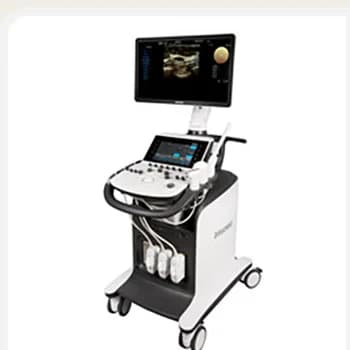
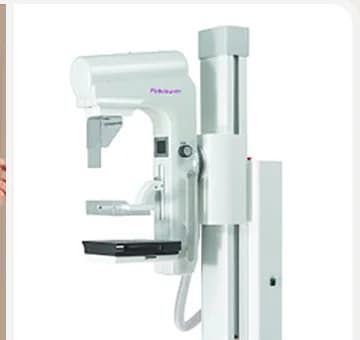
- Reduction removes breast tissue itself, so blood tests and breast ultrasound check its condition first, with further tests if needed.
- Medical team and anaesthesia
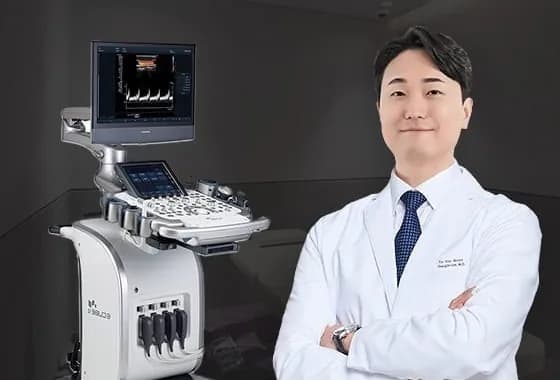
- Dr. Kikap Kim, Chief Director (plastic surgery; appointed Key Opinion Master by Motiva Korea), plastic surgeons Dr. Jeonghwa Seo and Dr. Yunggi Lee, and Dr. Beomsik Bang, On-Site Director of Breast Surgery. Anaesthesia is given by an anaesthesiologist on site.
- Recovery and stay
- Scars and swelling are managed through the care programme, alongside recovery physiotherapy. Nipple sensation can change for a while. The length of your stay depends on the extent of the incisions and how many progress checks you need before flying home.
- Consultation
- Phone +82-2-544-6996, online consultation, WhatsApp, LINE or WeChat depending on your region, and KakaoTalk. Weekdays 10:00 to 19:00, Fridays until 21:00.
What large breasts create is not only a question of appearance
Their weight rests on your shoulders, neck and back all day. Bra straps dig in and leave marks, and as posture rolls forward, strain accumulates in the neck and lower back. For many, the skin underneath rubs, becomes sore, and eczema keeps returning.
The limits on daily life build more quietly. Running and exercise become uncomfortable, clothes that fit are hard to find, and you shift how you stand because of how people look. This gets filed under cosmetic concerns, but in practice it is a matter of pain and everyday living.
So the first thing we listen for at consultation is not the size you want but what is uncomfortable. Whether it is the weight, the sagging or the difference between sides changes the direction of the surgery completely.
The signs that bring people to consider reduction
If even one of these has been going on for a long time, it is reason enough to have it looked at. This is a starting point for consultation, not a diagnosis.
- Bra straps leave marks on your shoulders or dig in.
- Neck, shoulder or back pain has become chronic.
- The skin under the breasts gets sore or eczema keeps returning.
- You avoid running or exercise because of your breasts.
- You buy tops to fit your bust, so everything else is too big.
- The weight has pulled the breasts down and the nipple position has dropped with them.
- The difference between sides is large enough that you pad only one.
Reduction, lift, or both
They can look similar from outside, but the conditions divide into three. Volume itself is excessive and weight is the problem; volume is reasonable but the tissue has descended; or the weight has driven the sagging. The first calls for reduction, the second for a lift, the third for reduction and lift designed together.
In practice, a good share of those who come for reduction fall into the third. So we do not treat reduction as separate from lifting — we approach it as one design that reduces volume while repositioning the nipple and the tissue at the same time. Breast reduction with lift being among the lead surgeon's stated specialties reflects the fact that these two are, in reality, joined.
The reverse also happens: reduction is not always the answer. If sagging rather than weight is the main problem, taking volume away does not solve it — and removing more than necessary leaves the upper breast looking empty. Making that call first is the point of the consultation.
The four things actually decided in surgery
The design is not "reduce by so many cup sizes" — it is settling the values below.
How much to remove
The point at which symptoms resolve and the point at which proportions balance may not be the same. Take too much and the upper body looks hollow; too little and the symptoms remain. We set the range looking at your whole frame.
Position and size of the nipple and areola
Reduction usually involves moving the nipple upward and reducing a stretched areola along with it. If the position is off, the result looks unnatural however much volume was removed.
The incision pattern
How much is removed and how much sagging there is change the incision that is required. We settle the balance between limiting the scar and doing what the shape needs.
What tissue to preserve
This bears on blood supply, sensation and the possibility of breastfeeding. Tell us in advance what you want prioritised, and the plan is built around it.
The incision is decided by your condition
It is not chosen — it follows from how much is removed and how much sagging there is. At consultation we show you the expected incision lines beforehand.
| Pattern | Where the scar sits | Considered when |
|---|---|---|
| Periareolar | Along the border of the areola | Little is being removed and sagging is mild |
| Vertical | Around the areola plus a vertical line running down | Moderate reduction is needed together with lifting |
| Inverted-T | Around the areola, a vertical line, and along the breast crease | A large amount is being removed and sagging is pronounced |
Scars are not something to hide — they are something to know in advance
Reduction is surgery that reorganises skin and tissue, so incisions come with it. We do not promise that no scar will remain. Instead we show you at consultation where it will sit and roughly how much, and judge together whether your condition warrants accepting that.
After surgery, scars and swelling are managed through the care programme, alongside recovery physiotherapy. Scars change in colour and thickness over time, so how they are managed genuinely changes how they look months later.
Because it involves breast tissue itself, a breast surgeon is involved
Reduction removes breast tissue. So before surgery we check your condition with blood tests and breast ultrasound, and run further examinations if needed. Findings that were not previously known do sometimes come to light in this process.
At U&U, breast surgeons are resident alongside the plastic surgeons. Having a subspecialist in breast disease on the team means the judgement about shape and the judgement about breast health are made in the same room. In an operation that handles tissue directly, that structure makes a practical difference.
Anaesthesia is handled by resident specialist anaesthesiologists, and their involvement continues into post-operative pain management.
How recovery unfolds
It varies considerably between people, but generally follows the course below. The exact timeline depends on the extent of the incision.
- 01
First week
Swelling and tightness are at their peak. Avoid raising your arms high, and keep to the positioning and compression you have been given — this stage affects the shape that follows.
- 02
Weeks 2–4
You return to ordinary activity. Running and lifting anything heavy are still too early, though — strain in this window is what widens scars.
- 03
1–3 months
Swelling subsides and the shape starts to settle. This is also when scars look at their most pronounced, so it is the stretch that needs managing.
- 04
After 3 months
The shape settles and scars gradually fade. Judging the final result from this point on is the accurate way to do it.
How far can it be reduced, and why we do not recommend the maximum
This is the question that comes up most often. Can it be made as small as possible? Sometimes it can, sometimes it cannot. But even where it can, we do not recommend an aggressive reduction.
Taking too much puts more strain on the blood supply and sensation to the nipple, and leaves less tissue to shape the result with, so the scar shows more as well. If you are considering a reduction because of pain, you do not need to go to an extreme to reach that goal. The real target sits between the point where the weight stops being a burden and the point where the shape still holds.
That point is hard to settle in words alone. So in consultation we look at simulations of the result together. Once you have seen what one step down and two steps down actually look like on you, the judgement often changes from what you had imagined in numbers.
Does surgery actually help the shoulder and neck pain?
When the breast is heavy, the body's centre of gravity shifts forward. Sustained, the shoulders roll forward and the curve of the neck flattens. The pain comes not from the breast but from the posture that has changed around it.
So reducing the size and letting the centre of gravity return can genuinely ease the musculoskeletal load. For patients who have carried shoulder and neck pain for years, the change they mention first after surgery is usually this rather than the shape.
That said, if the posture has already set, removing the weight does not undo it overnight. This is why we continue posture correction after a reduction as well. Reducing the weight is what surgery does; rebuilding how the body carries the reduced weight is what recovery does.
Pain after a reduction is characterised by range rather than intensity
A reduction removes skin, subcutaneous fat and part of the glandular tissue together. Those three are supplied by different nerves, so the way pain registers in each of them differs too.
From the skin comes heat, tightness and a burning quality. From the subcutaneous fat comes tenderness on pressure and a heavy, dull quality. From the glandular tissue comes a deep, blunt ache rather than a sharp one. So the pain often does not gather at one point but is felt scattered across several. Experiencing it for the first time can feel as though something has gone wrong, but it is the usual pattern after a reduction.
On intensity alone, early pain after a reduction is reported as lower than after an augmentation, which cuts through muscle, and it tends to last a shorter time. That is useful information when you are setting a surgery date and counting days off.
What happens to breastfeeding after a reduction
It is better to be direct. Breastfeeding after a reduction cannot be called completely safe. Removing tissue makes some degree of damage to the ducts, the path the milk travels, unavoidable.
The glandular tissue that makes milk is not taken out wholesale. But the route the milk leaves by can be interrupted, so feeding may be affected. This is the decisive difference from augmentation: there, the implant sits deeper than the glands and never meets the ducts, whereas a reduction works directly in the plane the ducts run through.
So if you are planning children, tell us early in the consultation. It opens the option of adjusting the timing, and if we do proceed, we plan in the direction that preserves as much of the duct system as possible. Learned afterwards, it is the kind of information that cannot be undone.
If I gain weight, will they grow again?
Yes, they will. The breast tissue that remains still contains fat, so it grows when your weight goes up and shrinks when it comes down. A reduction is not an operation that fixes size permanently.
So if a large change in weight is on the horizon, it helps to say so in consultation. If you plan to lose weight, planning around the post-loss state may be more favourable; if a gain is expected, we set the amount removed differently.
This is not particular to reduction — the same holds for augmentation. Size is not a number fixed on the day of surgery but a value that travels with the body you will have.
What to confirm before deciding on a reduction
There is far less information about reduction than about augmentation, which makes it hard to assemble a basis for judgement. These are questions you can ask at any clinic.
- The upper and lower bounds of what can be removed in my case, and what sets that range
- Which incision applies to me, and where and how much scar it leaves — shown in advance as a drawing or simulation
- Whether a reduction alone is enough or a lift is also needed, and the reasoning behind that call
- What the pre-operative breast examination looks for, and what happens if a finding comes back
- If I am planning children, the effect on breastfeeding and the options for adjusting the timing
- Whether posture correction or rehabilitation is part of recovery, and what I need to continue after returning home
Reduction moves the nipple as well
Many people arrive thinking only about making the breast smaller. In practice the nipple and areola move with it.
The nipple rises
Removing the heavy tissue lets a nipple that had been pointing downward move up. Where exactly it should sit is decided before surgery. That position shapes the impression of the result more than almost anything else.
The areola usually shrinks too
When the breast is large, the areola has often widened along with the stretched skin. Leaving the original areola on a reduced breast throws the proportions off, so the design usually reduces it at the same time.
Sensation needs time
Sensation around the nipple can be altered for a while after surgery. It returns with time in most people, but this varies, and the larger the amount removed, the slower it can feel.
How we match the two sides
If your sides differed to begin with, a reduction is also the chance to even them out. The goal we set, though, is not perfect symmetry but a level at which the difference does not read through clothing.
Taking too little is also a failure
Worrying about scars pushes people toward a conservative amount of tissue removal. But think about why the surgery exists. You decided on it because of shoulder and neck pain, posture and clothes. If the weight does not come down enough, all of that stays. The scar is a little shorter and the reason for operating has disappeared.
That does not make removing a lot the right answer either. The nipple and areola stay alive on the blood supply running underneath them. Cut the tissue you intend to keep too aggressively and that supply becomes precarious. So there is a ceiling and a floor on how much can be removed, and settling on a figure between them is the work of the consultation.
Reducing further later, after too little was taken, is harder than the first time. The path the blood supply takes has already been changed once, and hardened tissue has formed. This is why we say to be clear about the goal at the first operation. Set how much to remove against the discomfort you are living with, not against the scar.
The questions we are asked most about breast reduction
- How much can be removed?
- Not as much as you would like, but as much as the tissue and its blood supply can carry. Taking too much works against circulation and sensation and leaves an unnatural shape. At consultation we find, together, the point where symptoms resolve and the point where proportions balance.
- Will I be able to breastfeed afterwards?
- Reduction involves breast tissue and the ducts, so it can affect breastfeeding. The plan can be built to improve the chances, but it cannot be guaranteed. If you are planning to have children, please say so at consultation — it changes both the method and the timing we would recommend.
- Does sensation come back?
- Sensation in the nipple and skin can be dulled for a period after surgery and usually recovers with time. How fully it recovers varies between people, though, and the wider the incision the greater the chance some change remains. It is right to know this before deciding.
- Does it fix sagging as well?
- Most reductions include raising the nipple position and taking in stretched skin, so sagging improves along with it. But if sagging is the main problem, the approach should be a lift rather than a reduction — we separate the two at consultation first.
- How many days do I need if I am travelling from abroad?
- It depends on the extent of the incision and how many progress checks you have before flying home. Reduction generally needs more room for recovery than augmentation, so it is safer to check what is workable at online consultation before fixing dates.
- Can they get larger again later?
- Significant weight gain, pregnancy or breastfeeding can change the remaining tissue. That is why, if you are planning to have children, we discuss the timing itself with you. It is also why we check your condition at regular follow-ups.
Worth reading alongside reduction
Guides by Procedure
- Breast Augmentation in Korea
- Breast Augmentation Cost Guide — Quote Structure & Country Comparison
- Breast Revision Surgery — Capsular Contracture & Implant Replacement
- Breast Lift (Mastopexy) — Correcting Sagging Breasts
- Nipple & Areola Surgery — Inverted Nipples & Accessory Breasts
- Motiva Breast Augmentation
- Post-Surgery Breast Screening — Mammotome & Ultrasound
- Fat Transfer & Hybrid Breast Augmentation
Start by finding out whether reduction is the right answer
Send front and side photographs and tell us what is uncomfortable, and we will explain whether this is a case for reduction or whether a lift comes first. If reduction is not the answer, we will say so.