
Capsular Contracture Treatment in Korea: Hardening Does Not Automatically Mean Surgery
Does a hard breast always mean another operation? Capsular contracture is the most common reason for revision, that much is true, but not every contracture is a case for surgery. What comes first is working out which stage you are at. U&U Plastic Surgery in Gangnam, Seoul has done nothing but breasts for twenty years, and this guide takes you through capsular contracture treatment in Korea in order.
Medically reviewed byKikap Kim · Chief Director, Plastic Surgery
Capsular Contracture Treatment in Korea at a Glance
- What it is
- The capsule around the implant thickens or contracts, so the breast hardens and changes shape. The cause is not fully understood; bacterial contamination, bleeding, inflammatory reaction and individual constitution are known to act together.
- Stages and decisions
- If the breast is soft or only feels firm to the touch, it is usually watched. Visible distortion is where revision starts to be considered, and pain on top of it makes revision an active consideration. Not every contracture needs surgery.
- Diagnosis
- Touch alone is not enough, so breast ultrasound checks for contracture and inflammation, implant flipping, capsule thickness and rupture. Hardness is not always caused by contracture.
- Treatment options
- Partial capsule removal, total capsule removal, implant replacement and redesigning the implant pocket (with acellular dermal matrix where needed), combined according to the degree and the cause.
- Capsule surgery terms
- Capsulotomy releases tension by cutting the capsule; partial or total capsulectomy removes part or all of it; en bloc removes the capsule and implant together in one piece without opening it (when rupture is confirmed or leakage is suspected).
- Recurrence
- Contracture can come back after revision, and we do not tell you otherwise. Regular breast ultrasound checkups continue after revision so that any change is judged early.
- Medical team
- Dr. Kikap Kim, Chief Director (plastic surgery; appointed Key Opinion Master by Motiva Korea), plastic surgeons Dr. Jeonghwa Seo and Dr. Yunggi Lee, and Dr. Beomsik Bang, On-Site Director of Breast Surgery. Total capsule removal is an area the chief director has handled directly.
- Schedule and contact
- Contracture revision needs more progress checks, so we first ask how long you can stay; if the stay is short, splitting tests and surgery across two visits can be the better choice. Phone +82-2-544-6996, online consultation, WhatsApp, LINE or WeChat depending on your region, and KakaoTalk. Weekdays 10:00 to 19:00, Fridays until 21:00.
What capsular contracture is
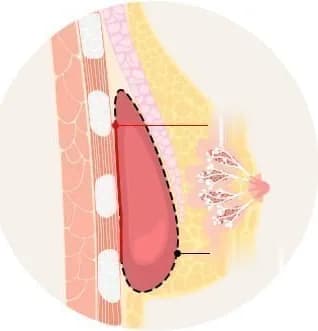
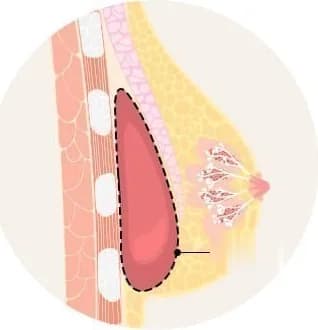
When an implant goes into the body, a thin layer called a capsule forms around it. That much is a normal response. The problem starts when that capsule thickens or tightens. It squeezes the implant, the breast turns hard, the shape rides up or goes round, and in bad cases it hurts. That state is what we call capsular contracture.
A lot of people ask us whether it means the surgery went wrong. It is not that simple. Contracture often shows up long after the operation, and it can appear on one side only. So if you swap the implant for a new one without finding out what caused it, you can end up in the same place again.
What is judged changes with the stage
The table below is there to help you understand where you stand. It is not a self-diagnosis chart. The actual call is made by examination and ultrasound.
| State | What you notice | Usual approach |
|---|---|---|
| Early | It looks natural and feels soft to the touch. | Not a case for treatment. We simply follow it at regular check-ups. |
| Firm to the touch | The shape is fine, but it feels firmer than it used to. | Usually observed. We check regularly whether it is progressing. |
| Visible distortion | The breast has ridden up or become visibly rounded. | The stage at which revision starts to be considered. |
| With pain | Firmness and distortion, now with pain as well. | Revision is actively considered. |
The cause is still not explained by any one thing
The exact cause has not been fully established. Bacterial contamination, bleeding during surgery, inflammatory response and individual constitution are all thought to act together. So any explanation that points at one single culprit is usually not accurate.
If the cause cannot be pinned down, prevention cannot be promised either. What is understood is that reducing tissue damage and bleeding during surgery, building a clean and precise pocket, and keeping to the recovery instructions can help lower the risk. That is part of why we work towards approaches that keep tissue damage to a minimum, Preserve among them.
For a revision, working out the cause matters even more. Spending the time on why it happened, rather than simply swapping the implant out, is what separates the results.
What is chosen in treatment
The combination changes with the severity and the cause. How these four are put together is the revision plan itself.
Partial capsule removal
Only the thickened part is cleared and the rest is left in place. The operation is smaller so recovery is quicker, though depending on your condition this alone may not be enough.
Total capsule removal
The whole capsule is taken out. We consider this when contracture is severe or the capsule itself looks abnormal. It is an area our director handles personally.
Implant replacement
The existing implant is exchanged for a new one. In most cases this is done together with the capsule work, and when you exchange, the choice of implant is reviewed again from the beginning.
Redesigning the pocket
If needed, the layer or the extent of the pocket the implant sits in is drawn again. Acellular dermal matrix is used alongside in some cases.
Feeling it with the hand is not enough
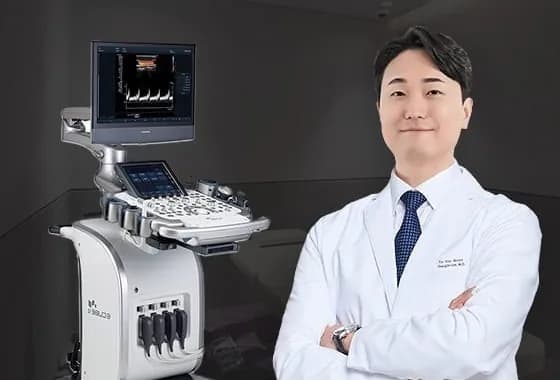
Palpation can tell us the breast is hard. What it cannot tell us is what is going on inside. At U&U we use breast ultrasound to check for contracture and inflammation, whether the implant has flipped, how thick the capsule is, whether there is a rupture, and whether the surrounding tissue looks normal, and only then do we judge.
There is a reason this matters. Hardness does not always come from contracture. If a rupture or another cause is layered on top, the approach changes completely. So a revision starts from an examination, not from a guess.
When it is worth having it checked
The list below is a reason to come and be checked once. It does not mean you need surgery.
- The breast has felt firmer than before for several weeks or more.
- One side has changed shape or looks as though it has ridden up.
- When you lie down it does not settle naturally but holds its shape.
- Pain or a pulling sensation has appeared.
- It has been a long time since surgery and you have never had an ultrasound check.
- You have had revision for contracture before.
Recurrence: we will not tell you it cannot happen
Contracture can come back even after a revision. If anywhere tells you it cannot, that is not true. What we can say is that analysing the cause and planning the surgery around it can help reduce the risk.
That is why we ask you to keep coming for regular checks after a revision. Breast ultrasound shows the state of the implant and the capsule, and if something changes we can act on it early. The earlier contracture is found, the wider your options are. Skipping the checks is what puts you in the worst position.
The names of these operations are confusing
Many of you meet the terms en bloc, capsulectomy and capsulotomy in overseas material before you ever meet us. Here is what actually separates them.
| Name | What is done | Typically used when |
|---|---|---|
| Capsulotomy | The capsule is opened rather than removed, releasing the tension | The capsule is thin and tight only in one area |
| Partial capsulectomy | Only the thickened parts are taken out | Only part of it has thickened, or the position needs correcting too |
| Total capsulectomy | The whole capsule is removed | The capsule is thick and hard, or has calcified |
| En bloc | Capsule and implant are taken out as one piece, without opening the capsule | Rupture is confirmed, or leakage of the contents is suspected |
Conditions that are easily mistaken for contracture
A breast that feels hard is not always capsular contracture. A different cause means completely different treatment, so we settle the diagnosis before anything else.
Early post-operative swelling
For the first few weeks after surgery the tissue is swollen and firmness is natural. We do not diagnose contracture from hardness at that stage.
The density of your own breast tissue
If your glandular tissue is dense to begin with, it feels hard regardless of the implant. What we go by is whether anything has changed compared with before surgery.
The implant sitting out of position
If the implant rides up or drops down, a particular area bunches up and can be felt. Sometimes the capsule is fine and only the position is the problem.
Haematoma or seroma
If blood or tissue fluid collects around the implant, hardness comes together with a change in size. Ultrasound separates this out fairly clearly.
Where the surgical plan bears on the risk of recurrence
There is still no way to prevent contracture outright. What is largely known is which parts of the surgical plan are tied to the risk. Controlling those points is what we can do.
The plane is one of them. With the implant under the muscle, less of its surface sits directly against glandular tissue. Surface character is also relevant, and how the capsule forms differs by surface, which has been argued over for a long time. The incision site works the same way. A route that passes through the ducts is not under the same conditions as one that does not.
These elements each carry trade-offs, so none of them can be decided on contracture risk alone. Tissue thickness, the shape you want, scar position and your surgical history all go on the table together. If you have already been through a recurrence, what the previous combination was is the starting point for the next plan.
What we hold to in surgery to reduce recurrence
We cannot guarantee the outcome. What we can do is keep to the steps that reduce contamination and tissue damage, because they are tied to it.
- Keep the dissection only as wide as it needs to be, reducing tissue trauma and bleeding
- Leave no bleeding point. Pooled blood is where an inflammatory reaction starts
- Handle the implant so it touches skin as little as possible, and keep it sealed until the moment of insertion
- Irrigate the pocket before the implant goes in
- Match the pocket to the implant. Too large and the position shifts, too small and it is compressed
- Place a drain where indicated, and set the time to remove it by watching how much collects
Scheduling if you are travelling from abroad
A contracture revision needs more follow-up than a first operation. That is especially true when the capsule has been removed widely. So at the consultation we ask first how long you can stay, then check whether the planned work can be finished safely within it.
If your stay is short, splitting it into two visits is sometimes better than compressing the schedule. Testing and diagnosis first, surgery on the next visit. If a rupture has been confirmed or the pain is clear, waiting is the worse option, so we make that call quickly.
Once you are home we carry on following your progress online. If you have had an ultrasound locally, send us the images or the report and we will look at them with you. What to check and when is written down for you before you fly back.
What we suspect first depends on when it hardened
When it started is the starting point of the diagnosis. Tell us the timing and the list of things to check narrows down.
| Timing | Hardness at this stage is | What we do first |
|---|---|---|
| The first few weeks after surgery | A period when swollen tissue feels firm | We watch whether the swelling is on its way down |
| Within a few months | If the swelling is gone but the firmness stays, it needs checking | Ultrasound to look at the capsule, inflammation and any collected fluid |
| After a year | Whether it came on gradually or changed suddenly matters | We check the speed of the change alongside any pain |
| An older implant | Rupture or malposition may be layered on top of contracture | We check the implant first and separate out the cause |
When we use acellular dermal matrix and when we do not
Once the capsule has been removed widely, the layer that was covering that area is gone. If your tissue was thin to begin with, the implant may show more or its edge may become palpable. That is when we consider acellular dermal matrix as reinforcement. Total capsulectomy and acellular dermal matrix fall within the lead surgeon's scope of practice.
That said, we do not use it in every contracture revision. If there is enough tissue and the removal is not extensive, it is not needed. Adding another material means adding another set of things to account for, so we use it only when it is called for.
And we do not say that adding it means no recurrence. This is a choice to reinforce a thinned area, not a device that prevents contracture. In consultation we explain why it is or is not needed, and decide from there.
What speeds up the assessment if you bring it
We can see you without any of it. But with the items below, the range we have to check shrinks considerably.
Your previous surgical record
Implant manufacturer and line, size, date of surgery, incision site. As much as you remember is fine. If you have a warranty card, send a photo.
Earlier imaging
If you have an ultrasound or report from elsewhere, we can compare it with today. Knowing the direction of change is more accurate than looking at one point in time.
When it started
Whether it hardened gradually or changed one day. That difference narrows the cause. The dates do not have to be exact, a rough sequence is enough.
What the pain is like
Whether it pulls, hurts when pressed, or hurts even at rest. And whether it has been getting stronger over time.
When only one side is affected, how we look at the other
Contracture on one side only is not uncommon. In that case operating on one side alone is of course possible. There is no reason to touch a side you are happy with.
We do check the other side on ultrasound as well, though. If the implants went in at the same time, the capsule thickness or position may have shifted even when everything looks fine from outside. If the check comes back clear, leave it as it is.
And once one side has a new implant, the two sides start running on different clocks. Meaning there is no guarantee that the balance set today will be the same in a few years. We tell you that too, and let you choose which way to go.
Changes we ask you to watch for after revision
The earlier contracture is found, the wider the options. If you see any of these, do not wait for the next check, get in touch.
- When the firmer feeling lasts more than a few weeks.
- When one side looks higher or the shape has changed.
- When it does not spread out lying down and holds its shape.
- When a pulling sensation or pain is new.
- When the size changes suddenly or it feels swollen.
- When your routine ultrasound is due, even with no symptoms at all.
The questions we are asked most about capsular contracture
- If it has hardened, does that mean revision is unavoidable?
- No. If there is no pain and the deformity is mild, we often just watch it. Revision is considered when the pain is clear or the shape is visibly changing. What comes first is finding out which stage you are at.
- Can medication or massage improve it?
- We cannot tell you that an established contracture will go back to normal with non-surgical measures alone. There are cases where we manage and monitor it depending on the condition, but if deformity and pain are clear, a surgical decision is needed. We do not recommend methods whose effect has not been established.
- If contracture occurs, do the implants have to come out?
- Not necessarily. In many cases the capsule is treated and the implant is exchanged for a new one. If contracture keeps coming back, or you no longer want to keep the implant, removal is an option too. In that case we talk through the shape after removal as part of the same conversation.
- Only one side has contracture. Does both have to be done?
- Operating on one side only is possible. But left-right balance and how the difference develops over time have to be looked at together, so we check both sides at the consultation before deciding.
- It was operated on at another clinic — will you see me?
- Yes. Revision after surgery elsewhere is one of our main areas. Tell us as much as you know about the previous operation, the implant type and when it was done, and we can guide you more precisely.
- Does revision for contracture take longer to recover from?
- Recovery from a straight exchange and from a contracture revision can be different. When the capsule has to be removed widely in particular, recovery needs more care from you. We will give you the actual timeline once we have seen your condition.
- When does contracture usually appear?
- The timing differs from person to person. Firmness in the first few weeks after surgery is more likely swelling, and if it remains once the swelling has gone it needs checking. It also appears long afterwards in some cases, so telling us when it started narrows what we need to look at.
- If the capsule is removed completely, will it not come back?
- We cannot say that. The extent of removal is decided from capsule thickness and position and the state of the tissue. Removing more is not inherently better. Wider removal also means recovery needs more care. Choosing the extent that fits your condition is the heart of the judgement.
- In what cases do you use acellular dermal matrix?
- We consider it as reinforcement when the tissue left to cover the area after wide capsule removal is thin. Total capsulectomy and acellular dermal matrix are within the lead surgeon's scope of practice. That said, we do not use it in every revision, and we do not claim that adding it prevents recurrence.
- What should I prepare before the consultation?
- Your previous surgical record (implant type and size, date of surgery, incision site), any ultrasound or report from elsewhere, and the sequence of when it started to harden. As much as you remember is fine, and we can see you without any of it.
Worth reading alongside contracture
Guides by Procedure
- Breast Augmentation in Korea
- Breast Augmentation Cost Guide — Quote Structure & Country Comparison
- Breast Revision Surgery — Capsular Contracture & Implant Replacement
- Breast Lift (Mastopexy) — Correcting Sagging Breasts
- Nipple & Areola Surgery — Inverted Nipples & Accessory Breasts
- Motiva Breast Augmentation
- Post-Surgery Breast Screening — Mammotome & Ultrasound
- Fat Transfer & Hybrid Breast Augmentation
Start by establishing which stage you are at
Send us photographs and what you know about your previous surgery, and we will tell you roughly which direction this is heading. If it is a case for watching rather than operating, we will say so.