
Breast Implant Removal in Korea: Taking Them Out Is the Easy Part, Deciding What Comes After Is Not
Taking the implant out is not the hard part. What needs judgement is what to do with the capsule, what to do with the skin that is left over, and whether you can live with the shape afterwards. U&U Plastic Surgery in Gangnam, Seoul has done nothing but breasts for twenty years, and this guide takes you through breast implant removal in Korea (explant surgery) in the order those decisions are made.
Medically reviewed byKikap Kim · Chief Director, Plastic Surgery
Breast Implant Removal in Korea at a Glance
- Why people consider removal
- Rupture, capsular contracture that has made the breast hard and painful, implants due for replacement, or simply not wanting to keep them. If the trouble comes from the implant, replacement is considered first; if the volume itself is the burden, removal.
- First examination
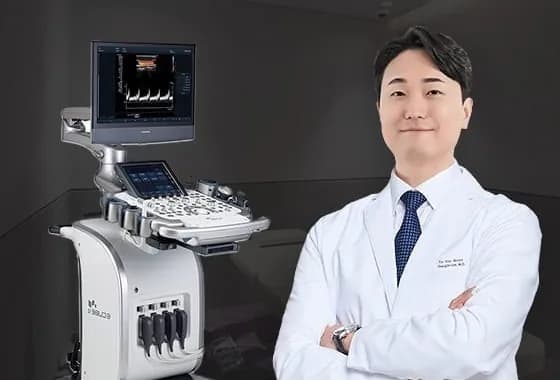
- Breast ultrasound checks the implant and capsule before anything else. A silicone implant can rupture without symptoms, so it is checked even if nothing feels wrong.
- Capsule handling
- The condition sets the scope: leave the capsule in place, partial capsulectomy, or total capsulectomy. The wider the scope, the longer the recovery. Total capsule removal is within the chief director's field of practice.
- Shape after removal
- Skin elasticity, the amount of your own breast tissue, implant size and how long the implants were in place decide the result. We do not tell you the breast will return to exactly how it was; we explain the likely range at consultation.
- Options alongside removal
- A lift at the same time, fat grafting, acellular dermal matrix, or staging: removal first, with the next step decided a few months later. If none is needed, none is recommended.
- Medical team and anaesthesia
- Dr. Kikap Kim, Chief Director (plastic surgery; appointed Key Opinion Master by Motiva Korea), plastic surgeons Dr. Jeonghwa Seo and Dr. Yunggi Lee, and Dr. Beomsik Bang, On-Site Director of Breast Surgery. Anaesthesia is given by an anaesthesiologist.
- Schedule
- The length of your stay and the number of progress checks depend on the capsule work and whether a lift is added, so they are set together at consultation. After you fly home, recovery is followed online.
- Consultation
- Phone +82-2-544-6996, online consultation, WhatsApp, LINE or WeChat depending on your region, and KakaoTalk. Weekdays 10:00 to 19:00, Fridays until 21:00.
There is more than one reason people think about removal
A confirmed rupture, a capsule that has gone hard and painful, an implant old enough to be due for exchange. Up to here the medical call leads. Then there is: I do not want to keep it any more, my life has changed, I want to undo the choice I made at the start. Plenty of people come to us for those reasons too, and they are reason enough.
Whatever the reason, the order of checking is the same. First we look at the state of the implant and the capsule on ultrasound. Silicone implants can rupture without any symptoms at all, so the absence of discomfort is not proof that everything is fine. Only once we know the state can we settle whether it is removal alone or removal plus something else.
We neither push removal nor talk you out of it. What we do ask is that you know exactly what shape you will be left with before you decide. It is a hard choice to undo.
Removal, or replacement
These two paths split on the same operating table. If the problem is the implant itself, rupture or age, and you want to keep the volume, exchange is the natural route. If it is the volume you no longer want, removal is where it ends. Most people are somewhere in between, and that is where the thinking happens.
There is one criterion. Is what bothers you now the implant, or is it the volume? If hardness and pain are the problem, clearing the capsule and putting in a new implant sometimes settles it. If the size and weight themselves are the burden, removal is the answer. We separate those two at the consultation before anything else.
What gets decided alongside removal
There is no such thing as "just taking it out". These four are what the operation actually consists of.
What to do with the capsule
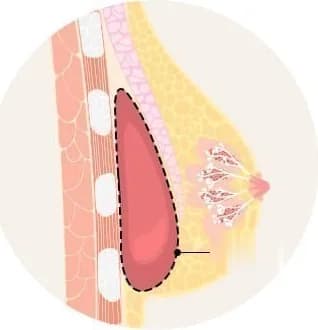
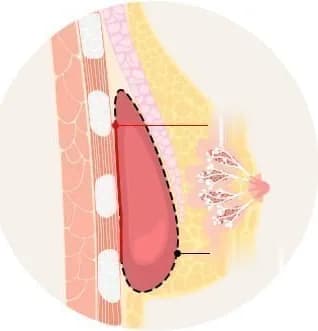
Whether to leave the capsule that formed around the implant, clear part of it, or remove it entirely is the biggest decision. The extent needed changes with its condition.
What to do with the skin left behind
When the space the implant occupied empties out, skin is left behind. Whether to leave it and give it time, or tidy it with a lift, we judge from the state in front of us.
Where to place the incision
Where possible we prefer to reuse the previous incision so that no new scar is created. That said, it can change with how much capsule work is needed.
Whether anything needs supplementing
If hollowing or a contour problem is expected after removal, we look at options such as fat grafting alongside. If it is not needed, we will not suggest it.
Handling the capsule, the extent is decided by its condition
The capsule is a layer your body built after the implant went in. Taking all of it out is not automatically better, and leaving it alone is not automatically better either.
| Extent | Considered when | What to weigh |
|---|---|---|
| Left in place | The capsule is thin, soft and causing no trouble | The smallest operation, so recovery is quickest. |
| Partial removal | Only part has thickened, or calcification is localised | Clearing only what is needed limits tissue damage. |
| Total removal | Contracture is severe, a rupture has spread its contents, or the capsule itself shows abnormal findings | The largest operation, needing more recovery time. It falls within the lead surgeon's stated scope of practice. |
The shape after removal, said plainly
Take the implant out and you lose that much volume. Obvious enough, but when people actually see it, it often feels bigger than they expected. The skin has been stretched, so for the first few weeks the looseness stands out, and over the following months it tightens up to a degree. It does not go back to exactly how it was before surgery.
How far it comes back depends heavily on your age, skin elasticity, how long the implant was in, and how much tissue you had to start with. That is why we do not say "it goes back to how it was". Instead we look at your skin and tissue at the consultation and describe the likely range as concretely as we can.
If sagging is expected and it is more than you would accept, a lift can be done at the same time as removal. Or you can give it time, watch, and decide later if it turns out to be needed. We put the pros and cons of both on the table together at the consultation.
What to confirm before deciding
Removal is hard to undo. Going through the list below leaves less room for regret.
- Whether what troubles you is the implant or the volume. Different causes, different answers.
- The current state of the implant and the capsule. This has to be confirmed on ultrasound before anything starts.
- The shape you can expect after removal. Whether you have understood it in advance, from photographs or from explanation.
- Whether to do a lift at the same time or look at it later. Whether the difference between the two has been explained to you.
- The recovery time you will need. The wider the capsule work, the longer it runs.
- Whether you might put implants back in one day. If so, we can plan in a way that keeps that possibility open.
How removal proceeds
If you are coming from abroad, the more you know about the previous surgery the more precise this gets. Tell us only as much as you know.
- 01
Online consultation: previous surgery details
Send us the implant type, when it was done, your current symptoms and photographs, and we will outline the possible direction, the tests needed and the rough schedule first.
- 02
In-person examination: assessing the state
Breast ultrasound shows the state of the implant and the capsule, and we add further tests if needed. This is where the extent of capsule work is settled.
- 03
The removal itself
An anaesthesiologist handles the anaesthesia, we remove to the extent agreed, and any additional work is done in the same session.
- 04
Recovery and follow-up after you return
We check your progress while you are still here, and once you are home we carry on following recovery online. The shape keeps changing over several months.
Four things decide the shape after removal
This is why the same operation gives different results. At the consultation we measure these four and then tell you the shape to expect.
| Condition | Works in your favour | Works against you |
|---|---|---|
| Skin elasticity | With elasticity left, the skin draws in to some degree after removal | With elasticity lost, the leftover skin shows as sagging |
| How much of your own breast tissue there is | With a reasonable amount of tissue, a shape still holds after removal | With thin tissue, the loss of volume is felt sharply |
| The size of the implant | The smaller the implant, the smaller the difference before and after | A large implant leaves behind a space it has widened |
| How long it was in place | A short period means less change to the tissue | Kept a long time, the tissue has adapted to being compressed |
What we consider alongside removal
If we judge that removal alone will not give you the shape you want, we discuss the following with you. None of it is compulsory.
A lift at the same time
When a lot of skin is left over and sagging is expected, the nipple position and the skin are tidied together. It adds scars, so we weigh the gain against that.
Fat grafting alongside
When you want to keep a little volume, your own fat is used. It does not replace the volume of an implant, and how much of it takes varies from person to person.
Acellular dermal matrix
Considered when the capsule has been removed entirely and the tissue is thin enough to need reinforcement.
Splitting it into stages
Remove first, then decide the next step a few months later once the tissue has settled. When there is no reason to rush, this is the safest choice.
Rupture progresses even without symptoms
A good proportion of silicone gel implant ruptures progress with no symptoms at all. The gel is cohesive, so even when the shell tears the shape does not collapse much. It does not hurt, it looks the same, and you carry on with no way of knowing.
So the first thing we do for anyone who comes in thinking about removal is an ultrasound. If a rupture is found, the judgement changes. The timing has to be brought forward, the capsule work may need to be wider, and if gel has stayed inside the capsule we plan how to open it differently.
If there is no rupture, on the other hand, there is no need to rush. You can leave the decision, watch it with regular checks, and pick your moment. The only thing to avoid is deciding without having looked.
What removal resolves, and what it does not
What removal takes away is clear enough. The volume and weight the implant created, the hardness and pain coming from the implant and the capsule, and implant-related problems such as rupture or malposition.
There are things that stay exactly as they are. Scars from the previous surgery, the part of the left-right asymmetry that was always there, and tissue changes from age and childbirth. These are not what removal addresses; they are separate questions.
On whether systemic symptoms improve after removal, we have no evidence to offer you. It is not an established area, so we will not assert that they improve or that they are unrelated. What we can do is tell you precisely what state the implant and the capsule are in, and if you decide on removal, carry it out safely. We do not go past that line in consultation either.
What to watch while you recover
Most of it is a normal course. The following, however, are signals to contact us about.
- One side suddenly swells, or the size becomes noticeably different
- The surgical site reddens, feels hot, and the pain worsens
- Your temperature rises and you have chills
- Drainage or discharge does not decrease but increases
- The suture line opens or changes colour
- The breast shape changing over several months is normal. The final judgement comes after that
How the shape settles after removal
The timeline differs from person to person. But knowing the order things change in means fewer surprises along the way.
| Stage | The shape at this stage | What helps at this point |
|---|---|---|
| Right after surgery | Swelling and compression make the real shape hard to read | Follow the bra guidance and do not irritate the wound |
| While the swelling goes down | A period when it looks smaller than you expected | Do not judge the result by the shape at this stage |
| Over several months | The skin draws in and the contour changes | Keeping progress photos makes comparison easy |
| Once it has settled | What you see here is the shape that becomes the baseline | Whether anything more is needed is discussed at this point |
We see you even if the surgery was done elsewhere
Consultations after surgery at another clinic are one of our main areas. Coming to us for removal alone is fine too. There are genuinely a lot of people who cannot easily go back to where they had it done.
We can see you without any surgical records. Breast ultrasound confirms the state of the implant, the capsule and whether there is a rupture, and if needed we consider mammotome as well. Tell us what you remember, and if you remember nothing we find it on examination.
Whatever we find, we write it up for you whether or not you go ahead with removal. If we judge that this is not the moment to take them out, we say so. Having the tests and deciding later is entirely fine.
What we hear most often at the decision point
These come up in real consultations. A lot of people arrive having worked through it alone, so we set them down here in advance.
It is hard to tell anyone
Many say they discussed getting them put in but found taking them out hard to mention. What you say in consultation is handled for clinical purposes only, so speak freely.
It feels irreversible and that is frightening
Removing them and putting implants back later is possible. But the tissue will have changed once by then, so a fresh plan is needed at that point. Decide knowing that.
I have no idea what the shape will be
This is the biggest worry we hear. That is why we explain first what determines the shape after removal, tell you the range we expect, and only then let you decide.
I am not sure now is the right time
In most cases there is no need to rush. But if a rupture has been confirmed or pain and inflammation are pronounced, waiting is the worse option. We sort out which case you are in first.
When you can take your time and when you should not
Most people can decide at their own pace. Thinking about it for a few more months does not change much in many cases. If your weight is shifting a lot or you are planning a pregnancy, after that may in fact be better.
There are cases where waiting is the worse option, though. When a rupture has been confirmed, when pain or inflammation is pronounced, and when the shape or size has visibly changed over a short period. In those cases we move quickly too.
Which case you are in cannot be sorted by touch alone. Only after ultrasound does it become clear whether this is a state you can wait in. So even if you are putting the decision off, we suggest having the tests done first.
The questions we are asked most about implant removal
- Can I just have them removed and nothing put in?
- Of course. Finishing with removal is a complete choice in its own right. What we do is explain the expected change concretely at the consultation, so that you understand what the shape will be before you decide.
- Does the capsule always have to be removed completely?
- No. Depending on the state of the capsule, leaving it alone is sometimes the better option. Total removal makes the operation larger and recovery longer, so the principle is to do it when the condition calls for it. We set the extent after the ultrasound.
- Will my breasts go back to how they were?
- It does not go back to exactly the same state. The skin does tighten to a degree over several months, but the result differs a great deal with age, elasticity and how long the implant was in. We do not use the phrase "back to how it was"; we tell you the likely range instead.
- Can I have only one side removed?
- Yes. But it will create a left-right difference, so at the consultation we work out together whether you can accept that, or whether the other side should be dealt with as well.
- Can I have implants again later?
- Yes. If there is a chance you will want implants again, tell us beforehand. We can plan in a way that keeps that possibility open. That said, tissue changes as time passes, so the conditions have to be looked at again when the time comes.
- How many days do I need if I am travelling from abroad?
- It varies a great deal with the extent of the capsule work. Total capsulectomy, or a lift done at the same time, needs more room for recovery. It is safer to check the expected extent in an online consultation before you book the trip.
- The surgery was at another clinic. Can I come to you just for removal?
- You can. Consultations after surgery at another clinic are one of our main areas. There are genuinely a lot of people who cannot easily go back to where they had it done. Whatever we find, we write it up for you whether or not you go ahead with removal.
- I do not have my surgical records. Is that all right?
- It is. Breast ultrasound confirms the state of the implant, the capsule and whether there is a rupture, and if needed we consider mammotome as well. Tell us what you remember, and if you remember nothing we find it on examination.
- How long does the shape take to settle after removal?
- The timeline differs from person to person, and we do not pin a number on it. You go through a stage where it looks smaller as the swelling goes down, then the skin draws in and the contour changes. Judging at the end, once it has settled after several months, is the accurate way.
- I cannot tell whether to remove them now or wait longer.
- Most people can decide at their own pace. But if a rupture has been confirmed, if pain and inflammation are pronounced, or if the shape has visibly changed over a short period, waiting is the worse option. That distinction only comes out on ultrasound, so even if you are putting the decision off, have the tests done first.
Worth reading alongside removal
Guides by Procedure
- Breast Augmentation in Korea
- Breast Augmentation Cost Guide — Quote Structure & Country Comparison
- Breast Revision Surgery — Capsular Contracture & Implant Replacement
- Breast Lift (Mastopexy) — Correcting Sagging Breasts
- Nipple & Areola Surgery — Inverted Nipples & Accessory Breasts
- Motiva Breast Augmentation
- Post-Surgery Breast Screening — Mammotome & Ultrasound
- Fat Transfer & Hybrid Breast Augmentation
In-depth guides by topic
- Breast Augmentation Recovery Time
- Breast Implant Size Guide
- Breast Implant Comparison Guide
- Breast Reduction in Korea
- Capsular Contracture Treatment in Korea
- Breast Asymmetry Correction in Korea
- Breast Augmentation Incisions & Scars in Korea
- Breastfeeding After Breast Augmentation
- Breast Implant Checkup in Korea
- Breast Surgery in Korea for International Patients
- Areola Reduction in Korea
Establish where things stand, then decide
Details of your previous surgery and a few photographs are enough to start. Whether removal is the right choice or exchange is better, we will tell you what your state actually shows, without pushing you either way.