
Breast Augmentation Recovery Time: What Changes Week by Week
This guide covers breast augmentation recovery time in Korea at U&U Plastic Surgery, a breast-only clinic in Gangnam, Seoul. Recovery is not a single number of days; different things happen in your body at each stage. Here are the recovery stages U&U actually manages, and how patients travelling from abroad can plan their stay.
Medically reviewed byKikap Kim · Chief Director, Plastic Surgery
Breast Augmentation Recovery at U&U Plastic Surgery at a Glance
- Recovery stages
- Recovery is managed in stages (weeks 1, 2, 3, 4 and 12), not as a single number of days. In week 1 pain eases and the incisions begin to heal; in week 2 tissue starts to settle around the implant; in weeks 3 to 4 swelling goes down noticeably; by week 12 the scar is maturing and the final shape and feel are settling in.
- Your stay in Korea
- The length of your stay is set by how many post-operative checks you have before you leave, not by the operation itself. If the timing works, consultation, tests and surgery follow on the same day after you arrive, and you fly home once the early progress check and stitch and dressing care are done.
- Flying home
- Instead of a fixed "from day X" answer, the decision is made at your pre-departure visit by looking at the incisions, the swelling and how your pain is being managed. If a flight you have already booked would strain your recovery, we tell you so first.
- What changes the pace
- The implant layer (under the muscle, the first two weeks are more painful and take longer), the incision site (breast fold or armpit), skin elasticity and tissue thickness, whether your work uses your arms, and whether there was early bleeding or a haematoma.
- What slows it down
- Seroma (clear fluid collecting) and haematoma. A haematoma can be brought on by overexertion, alcohol or repeated big arm movements, so even without pain you should not overdo things early on. Checking at the set times means either is found and treated early.
- Aftercare
- The six aftercare programmes of our 2.0 Care Centre (infrared light massage, care pouch, capsulitis care, radiofrequency and ultrasound care, Healite, scar care) and three recovery therapies (physical therapy, Pilates, bra education) are scheduled against each stage of healing.
- Medical team and checks
- Dr. Kikap Kim, Chief Director (plastic surgery; appointed Key Opinion Master by Motiva Korea), and plastic surgeons Dr. Jeonghwa Seo and Dr. Yunggi Lee. Specialist anaesthesiologists are resident and handle anaesthesia and post-operative pain management, and the in-house breast surgeon checks capsule thickness and implant condition by ultrasound.
- After you fly home
- Progress checks continue online through photos and messages. Before you leave we set out the warning signs to watch for and the ultrasound items to check locally, and we recommend booking regular implant ultrasound checkups.
- Consultation
- Phone +82-2-544-6996, online consultation, WhatsApp, LINE or WeChat depending on your region, and KakaoTalk. Weekdays 10:00 to 19:00, Fridays until 21:00.
Why recovery is a sequence of stages, not a length of time
It is hard to answer "how many days" with one number. Two people having the same operation can heal differently depending on body type and tissue condition, the size of the implant and the layer it sits in, and how active they normally are. More importantly, recovery is not a single event — the period when pain subsides, the period when swelling goes down, and the period when the shape settles all arrive in order.
That is why U&U manages recovery in stages rather than by a deadline. There is a defined set of things to check and manage in each week, and an aftercare programme attached to that stage. The week-by-week table below is the recovery management schedule U&U actually runs; it shifts earlier or later according to how an individual is healing.
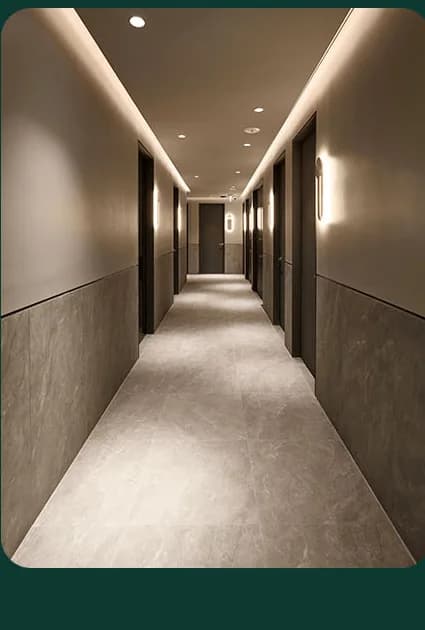

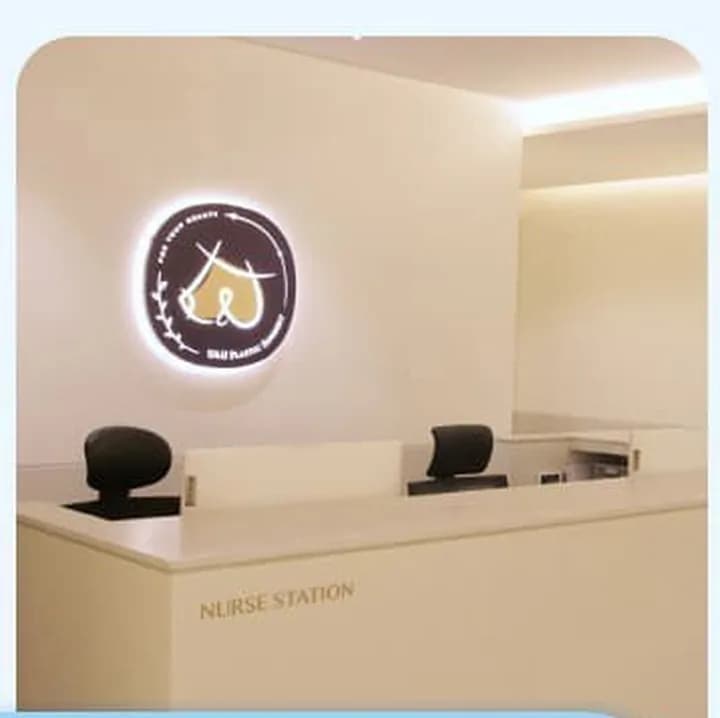
What we manage, week by week
What your body is working through at each stage, and what U&U focuses on managing during that period.
| Stage | What is happening in your body | Focus of care in this period |
|---|---|---|
| Week 1 | Pain from immediately after surgery gradually eases, and the incision begins to close. | Pain relief · cell regeneration · wound healing |
| Week 2 | Pain eases further, and tissue begins to settle around the implant. | Pain relief · cell regeneration · contracture prevention |
| Week 3 | The early inflammatory response and swelling reduce noticeably. | Inflammation control · swelling reduction · pigment toning |
| Week 4 | As swelling continues to subside, the outline of the shape starts to emerge. | Inflammation control · swelling reduction · contracture prevention |
| Week 12 | Scars move into the maturing phase, and the final shape and feel begin to settle. | Comprehensive scar care · pigment toning |
How many days should you plan if you are coming from abroad?
This is the question we are asked most. The short answer is that your stay is not set by "how many days for surgery" but by "how many post-operative checks you want before you leave". U&U has designed the process so that surgery on the day of consultation is possible when the schedule allows, so consultation, examination and surgery often follow on within a single day of arrival. From there, the standard structure is to confirm early healing, complete any necessary care such as suture removal and dressing, and then fly home.
In other words, what determines the length of your stay is the follow-up schedule, not the operation itself. Some patients can keep it short; others stay longer and receive recovery care before leaving. Tell us your flight dates in the online consultation and we will first show you what is possible within that window. If the schedule is too tight, we will say so — that is our policy.
How an international patient's schedule is built
The actual schedule is adjusted to your condition and your flights — this is the order of the components.
- 01
Arrival · consultation · examination
An in-person consultation with the surgeon and any necessary examinations. Narrowing the direction in advance through online consultation makes this step shorter.
- 02
Surgery · same-day recovery
Surgery proceeds under the care of a specialist anaesthesiologist, and you move on as instructed once your condition has been confirmed in the recovery room.
- 03
Early progress check
During your stay you return to the clinic so we can check the incision, swelling and early shape, and carry out any care that is needed.
- 04
Final check before departure
We confirm that you are in a condition to travel, and go through precautions for the journey and how to care for yourself at home.
- 05
Online follow-up after you return
Once home, we continue to follow your progress through photographs and messages. You can ask questions at any point, regardless of how much time has passed.
When can you fly home?
A long-haul flight means sitting for hours in a cabin with low pressure and low humidity, which can make swelling and discomfort worse soon after surgery. Rather than giving a blanket "you can fly after X days", U&U judges it by looking at your actual condition at the pre-departure visit. We check the state of the incision, how much swelling remains and how your pain is being managed, and then advise when it is reasonable to travel.
If your flights are already booked, tell us at consultation. We will arrange the surgery and check-up dates around them — and if we judge that the schedule puts your recovery at risk, we will tell you that first. We do not push ahead against a patient's recovery in order to fit a diary.
The six aftercare programmes that support recovery
At U&U, surgery and recovery are one process, not two. The aftercare programmes at our 2.0 Care Centre are scheduled against each stage of healing.
Infrared light massage
Warmth and massage support circulation and ease the tightness and discomfort of the early recovery period.
Care pouch
Support that holds the breast stably during recovery so it can settle into position.
Capsulitis care
A programme aimed at preventing the tissue around the implant from hardening.
Radiofrequency · ultrasound care
Recovery care timed for the period when swelling and the inflammatory response are subsiding.
Healite
Light-based care chosen for the condition of the skin and tissue during recovery.
Scar care
Comprehensive scar management timed to the period when scars are maturing.
Three recovery therapies — healing for the whole body
We do not look at the breast alone. We also manage the discomfort that comes from changes in posture and muscle use after surgery.
Physical therapy
Releases tension around the shoulders and back, which stiffen easily after surgery, and helps restore movement.
Pilates
Exercise matched to your recovery stage, restoring posture and core strength together.
Bra education
Guidance on choosing and wearing the right underwear during recovery and afterwards. Wearing the wrong thing affects the shape.
What people most often overlook during recovery
The points we find ourselves repeating in consultation. Detailed instructions are given separately, matched to your own condition.
- In early recovery, avoid raising your arms high and lifting heavy objects.
- Follow the underwear instructions you are given — changing them on your own can affect the shape.
- Swelling and bruising can subside unevenly on each side. Judge symmetry last, not first.
- Smoking and alcohol work against both healing and scarring.
- If you have pain, fever or discharge that differs from what you expected, contact us immediately rather than deciding for yourself.
- Even after you return home, it is worth scheduling regular implant ultrasound check-ups.
Why the same operation heals at different speeds
The more reviews you read, the more confusing this gets. One person is back at work in three days, another needed a week more. Usually that is not a difference in skill but a difference in conditions.
| Condition | Heals faster | Heals more slowly |
|---|---|---|
| Implant plane | Above the muscle (under the gland) | Under the muscle |
| Incision site | Inframammary fold | Armpit |
| Tissue condition | Good skin elasticity, thicker tissue | Thin skin, little tissue |
| Your work | Work that does not involve large arm movements | Repeated arm use or heavy lifting |
| Early complications | None occurred | Bleeding or haematoma occurred |
Why it hurts more under the muscle
Whether the implant sits above or under the muscle is usually discussed only as a question of shape and feel. Seen from recovery, though, this choice changes the first two weeks substantially. A great many nerves and blood vessels run through muscle. Lifting that muscle to create the pocket means more pain and a longer recovery.
That does not make above-the-muscle always better. In someone with thin tissue, an implant placed above the muscle can show its outline or be felt, and it also changes how breast screening images read. So we do not choose the plane on recovery speed alone. We decide it against tissue thickness, the result you want, and your screening plans going forward.
Knowing this at the consultation lets you plan realistically. If the decision is under the muscle, it is better to leave the first week a little emptier. Being in pain you expected and being in pain you did not are two completely different experiences of anxiety during recovery.
Feeling no pain is not permission
Some people have almost no pain from the day of surgery, when the anaesthetic and pain management have suited them well. That is actually the moment to be most careful. The fact that this tissue went through incision and suturing a few hours ago does not change because it does not hurt.
If you move as usual because nothing hurts, your blood pressure rises and you overuse your arms. That can show up as bleeding, a haematoma or inflammation. Early complications like these do not just slow the whole recovery down; they also push the tissue around the implant in the direction of hardening.
Large follow-up studies of augmentation patients show the same picture. Most were back to ordinary life within a day of surgery, and the ones whose recovery stretched out noticeably were those who had acute bleeding or a haematoma. The surest way to shorten your recovery is not to push in the early days.
The two things that delay recovery
Recovery sometimes runs long even when the surgery went well, and it is usually one of these two. Knowing what they are means they get caught early.
Seroma
Clear fluid collecting inside the surgical pocket. A good proportion is absorbed on its own and needs no intervention. Checked at the scheduled points, it is found early and dealt with.
What makes a seroma more likely
Dissection wider than it needed to be, or a pocket large enough that the implant rubs inside it. A body that reacts strongly to inflammation also plays a part.
Haematoma
Blood collecting inside the surgical pocket. It can follow incomplete haemostasis during surgery, but it also happens when blood pressure rises sharply afterwards.
What invites a haematoma
Overexertion, alcohol, and large repeated arm movements are the usual culprits. Which means it can appear because of what happened during recovery, even when the surgery itself went cleanly.
Through recovery, your body is building the capsule
When an implant enters the body, the body recognises it as foreign and builds a thin membrane around it. That is the capsule. The capsule itself is not abnormal; it forms in everyone. What matters is how it forms. Settling thin and soft, it leaves the feel and shape stable. Settling thick and firm, it becomes contracture.
The period in which that membrane forms is early recovery. The instructions we give during this time may look minor, but they connect directly to that process. Avoiding sleeping on your side is one. Coming in for ultrasound at the appointed intervals is another.
A breast surgeon is on site at U&U and checks the thickness of your capsule and the state of the implant by ultrasound. Catching changes you cannot see at this stage reduces what has to be dealt with later. After you fly home, we set out the same items so they can be checked where you live.
When you can start moving again
Lying perfectly still is not good either. There is an order to it.
- Rest comes first for the day or two right after surgery. Push in this window and everything after it slips
- If nothing is wrong, starting light walking early helps recovery. The measure is frequency, not intensity
- Raising your arms high and lifting anything heavy wait until the point we give you
- Avoid sleeping on your side while the capsule is settling
- Returning to exercise is judged by movement, not by the name of the sport. We look at whether it uses the upper body and set the timing from there
- If pain decreases and then increases again after you are home, or one side suddenly swells, contact us straight away
What the first night is actually like
This is one of the most frequent questions and one of the least well documented. Sleep that night is usually shallow, and less because of pain than because of position. You need to lie on your back, facing up, and for anyone who does not normally sleep that way, that alone is strange. Propping your upper body up slightly makes it considerably easier.
Pain is managed by the clock. Keeping to the set intervals hurts less in total than waiting until it hurts and then taking something. Start fluids in small amounts from the point we tell you. When you get up for the bathroom, do not sit up abruptly. Roll onto your side and rise slowly using your trunk rather than your arms.
If you are on your own, put water, medication and your phone within reach before you sleep. Stretching an arm out at night to pick something up is more of a strain in early recovery than it sounds. If something feels wrong, contact us at that hour rather than waiting for morning.
Normal things that alarm people
These four generate the most messages during recovery. Nearly always they are normal progress, but if you cannot tell, asking is the right move.
The two sides swell differently
Swelling rarely goes down at the same rate on both sides, because what was handled during surgery differs slightly left to right. Symmetry gets judged after the swelling has resolved.
Bruising changes colour
Red moves through purple to yellow. The colour changing is the absorption process, and bruising that seems to spread downward is a common effect of gravity.
A tight, pulled feeling
Early on the breast sits high and feels tight. It comes down gradually as the tissue settles. Do not read the shape at this stage as the final result.
Sensation feels dulled
Incision and dissection can leave sensation temporarily blunted. It usually returns with time, though the pace differs from person to person.
The questions we are asked most about recovery
- When can I go back to normal daily life?
- Light everyday movement is possible relatively early, but movements that use the arms heavily, and exercise, need to be increased in stages. Individual variation is wide, so at each progress check we tell you specifically what range is appropriate for your current condition.
- How much pain is there during recovery?
- Pain is greatest immediately after surgery and decreases from there. At U&U, specialist anaesthesiologists are resident and handle both anaesthesia and post-operative pain management. Do not endure pain that is hard to bear — tell us, because there are ways to manage it.
- When does the swelling go down?
- Early swelling typically reduces noticeably around weeks three and four, and the final shape takes longer than that to settle. For that reason it is better not to judge the result too early.
- I cannot receive care once I am home — is that a problem?
- After you return, we continue to follow your progress online. Before departure we go through self-care methods and precautions, and we also tell you the warning signs to watch for. If needed, we will list the items to have checked locally.
- Can recovery be slower than expected?
- It can. Progress differs with tissue condition, lifestyle and the extent of surgery. What matters is identifying it quickly when it happens — which is why we recommend keeping to the scheduled progress checks.
- Does revision surgery take longer to recover from?
- The extent of revision surgery depends on the state left by the previous operation, so individual variation in recovery is greater. In a revision consultation we plan the recovery schedule as part of the surgical plan.
Read more about recovery
Guides by Procedure
- Breast Augmentation in Korea
- Breast Augmentation Cost Guide — Quote Structure & Country Comparison
- Breast Revision Surgery — Capsular Contracture & Implant Replacement
- Breast Lift (Mastopexy) — Correcting Sagging Breasts
- Nipple & Areola Surgery — Inverted Nipples & Accessory Breasts
- Motiva Breast Augmentation
- Post-Surgery Breast Screening — Mammotome & Ultrasound
- Fat Transfer & Hybrid Breast Augmentation
Find out what recovery plan is possible within your dates
Tell us how many days you can stay and the schedule you have in mind, and we will show you what is possible within it — and where it would be pushing too hard.